6 min read
2026-04-17
The Power of Patchouli – Iconic, Bold, and Indispensable
Written By: Robin Lander
Out of the patchouli-scented fog of Haight Street in San Francisco in the late 1960s emerged a generation of free-spirited rebels, bohemian artists, social activists, and agents of change. Infused with ideals of peace, love, and a growing awareness of environmental responsibility, this counterculture helped inspire a broader cultural shift that changed our world. Among many achievements during this time was the launch of the first Earth Day in 1970, bringing together people from all walks of life to protect our planet.
Patchouli, with its warm, earthy, and brazen aroma was the perfect scent for those who rejected the artificial in favor of the natural, raw, and real. While the Grateful Dead and Jefferson Airplane were packing The Fillmore with crowds and clouds of patchouli, The Doors were embracing the musky fragrance in Los Angeles, both creating a vibe and propelling a movement. Grounding, sensual, and persistent, patchouli became the signature scent of the hippie generation and a fitting symbol for a return to nature.
But patchouli has a far more substantial history than this. And whether you love it or avoid it, it behooves any formulator to understand its undeniable value. To dismiss patchouli is, in many ways, like a painter refusing to use the color blue. We’ll explore the enduring allure of patchouli and its indispensable place in the perfumer’s palette.
The Herb and the Oil
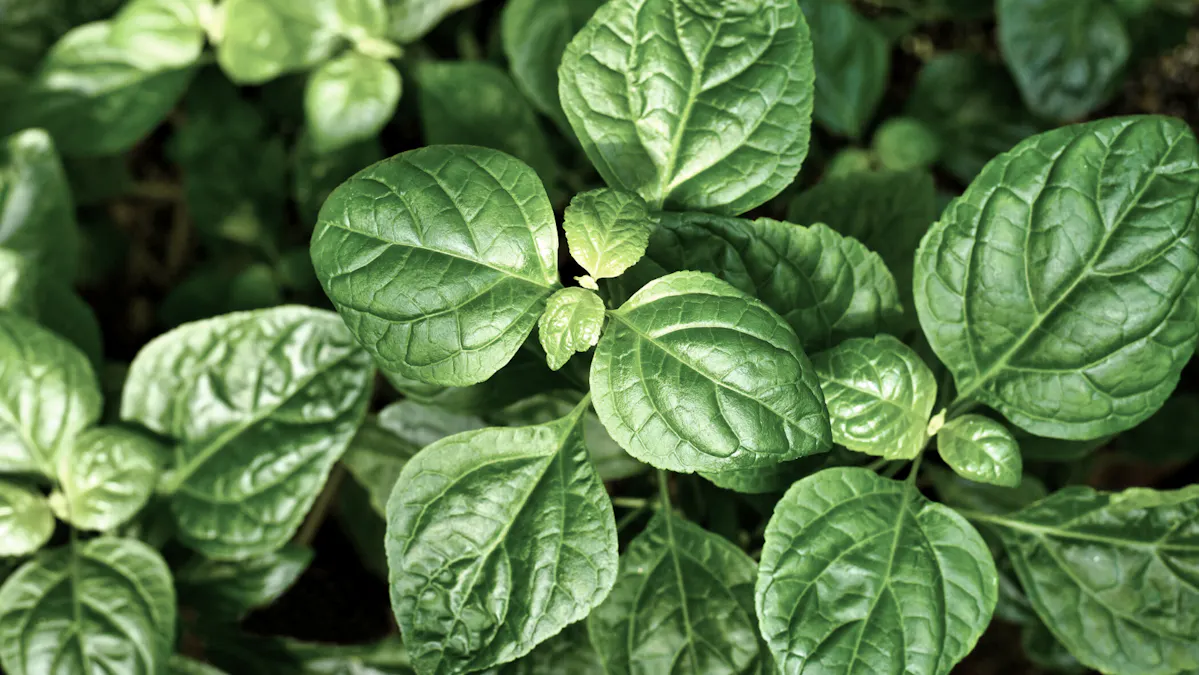
Patchouli is an herbaceous perennial in the mint family native to Southeast Asia, including Indonesia, Sri Lanka, and the Philippines. It thrives in hot, humid climates where its fragrant green leaves and tiny pink-white flowers grow under dappled sunlight.
To produce the essential oil, the leaves are typically dried, scalded, or lightly fermented to help rupture cell walls and release the characteristic aroma. Steam distillation yields a deep amber-brown oil with a very complex, rich, earthy, herbaceous aroma that is renowned for its outstanding tenacity and exceptional fixative properties.
Patchouli in History
Patchouli’s use goes back thousands of years where it was valued for fragrance, ritual, and skincare in ancient Egypt, Rome, India, the Middle East, and China. Historians suggest patchouli was traded along the Silk Road for at least 1,500 years, moving between Asia and the Middle east. Traders discovered that layering silk and cashmere textiles with patchouli leaves helped protect them from moths and other pests during long journeys. Over time, the scent became associated with these exotic fabrics and other valuable and luxurious goods.
Interestingly, Napoleon is often credited with introducing patchouli to Europe around 1800 through a scented cashmere shawl he brought home for his dear Josephine. Whatever the exact path, the aroma found its way into European markets around this time, captivating high society and securing its place in fine perfumery.
Patchouli’s resurgence in the 1960s came through both travel and trade. Backpackers returned from soul-seeking travels to India, Nepal, and the Middle East along with patchouli, flowy clothing, beads, and sitars. At the same time, imported skirts, scarves, and caftans arrived in the U.S. scented with the unmistakable aroma, a sign of their exotic origins. A favorite of flower children to musicians like Jimi Hendrix, patchouli quickly became the defining aroma of the era.
All the while, patchouli remained a powerful force in fine fragrance, appearing in compositions such as Chanel No. 5 (1921), Miss Dior (1947), and Clinique Aromatics Elixir (1971), continuing its legacy in both classic and modern perfumery.
What Patchouli Can Do in a Composition
Patchouli’s strength and tenacity are virtually unparallelled among plant-based materials, making it one of the most valuable fixatives and perfume ingredients. Its versatility is another benefit, blending well with almost anything while providing both a foundation and an ambiance. Here are a few things patchouli can do:
· Act as an excellent fixative, extending longevity
· Blend harmoniously with florals, woods, resins, spices, and citrus
· Round sharp edges and add warmth
· Contribute depth, sensuality, complexity, and a bit of mystery
· Play a key role in woody, chypre, and amber accords
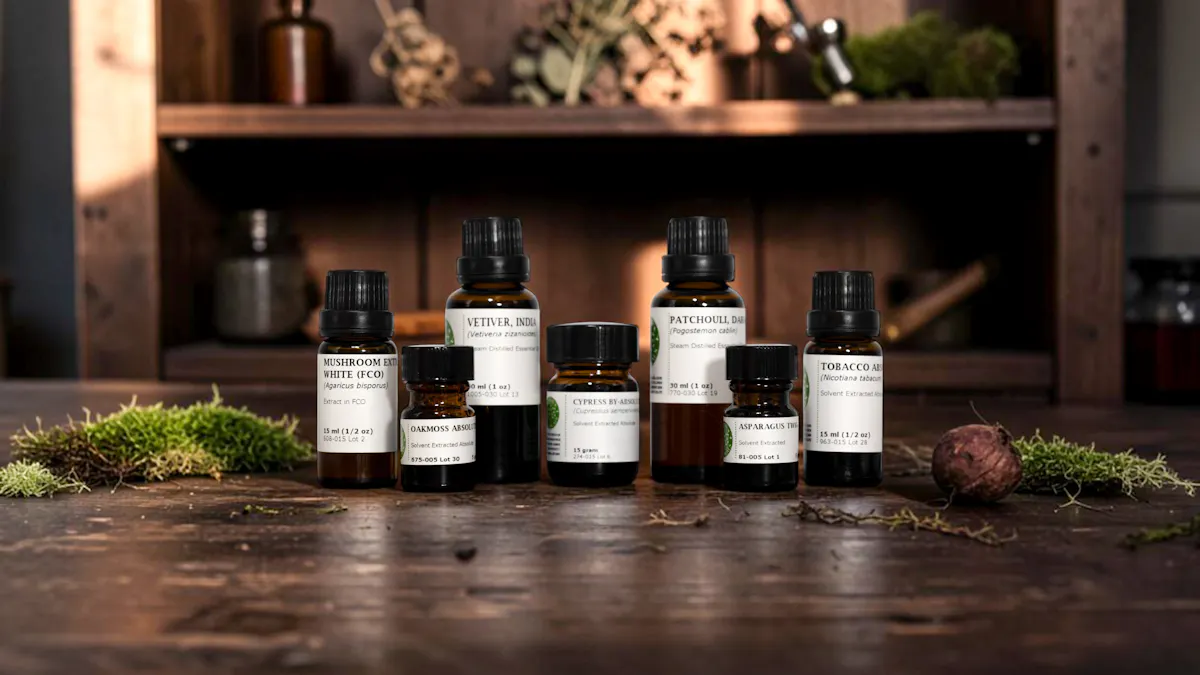
· Enhance earthy essences like Vetiver, Mushroom, Coffee, and Spikenard
· Lend comforting, grounding qualities to aromatic blends
Patchouli can have a starring role in a perfume, or it can be carefully tucked into base accords to subtly evoke a sense of earth, roots, wet moss, muskiness, or even cocoa. Start gradually, working your way up to the desired intensity. Be sure to give your blend time to age and mature as patchouli will mellow a bit as it marries with the other essences.
Our Patchouli Offerings
Are you ready to play with patchouli? We have four distinct offerings to choose from for all your formulation needs.
Aroma: Extremely rich, deep, earthy, sweet-herbaceous, and somewhat spicy with ethereal, floral-sweet, and wine-like top notes and a mellow, woody-balsamic body note.
Patchouli, Dark is named for its deep, amber-colored hue, the darkest of all our patchouli oils. Possessing the quintessential patchouli aroma, it’s popular among perfumers, aromatherapists, and cosmetic formulators seeking a fine, classic patchouli. If you’re a die-hard patchouli enthusiast, this is the one for you. Take a trip back in time by blending it into a perfume with Sandalwood – Plantation Grown.
Aroma: Rich, earthy, and sweet-herbaceous, but with a lighter and clearer aroma than our Patchouli, Dark.
Patchouli, Light is lighter in color because it is distilled using non-reactive, stainless-steel vessels and is free of iron coloration that is commonly found in patchouli oils. With an aroma a little less intense than Patchouli, Dark, it is often favored by perfumers and formulators of body care products who prefer its cleaner, free-spirited character. It’s excellent in a muscle and joint massage oil with Frankincense CO2, India and Lavender – High Elevation.
Aroma: Deeply pungent, warm, earthy-woody, sweet-herbaceous and smooth, with an underlying soft boozy, slight floral note in the long drydown.
Patchouli – Organic has a depth of aroma that falls between our Patchouli, Dark and Patchouli, Light and is the ideal option for those formulating certified organic products. It’s recommended for use in skincare products where patchouli is known to lend revitalizing qualities, particularly for mature and dry skin. Try it with a bit of Rose Otto, Turkey in a base of Argan Oil – Organic for a luxe facial oil and divine treat for the skin.
Aroma: Exceptionally smooth and refined, earthy, musky, dry and slightly spicy-warm; deep and very tenacious.
Our Patchouli – Double Distilled is a specialty patchouli created for perfumers. While it has the richness and depth of our Patchouli, Dark, it has an extraordinary smoothness that provides a seamless, velvety anchor in a composition. Double distillation entails two extraction processes, the first via traditional steam distillation of the patchouli leaves. In the second extraction, the essential oil undergoes molecular distillation to remove some of the ‘dirtier’ and sharper notes typical of patchouli as well as lighten the color. This is the patchouli for perfumers who appreciate patchouli’s strengths, yet desire a sophisticated, refined cleanness of aroma.
Like a Fine Wine
Patchouli is one of the rare essential oils that gets better with age, deepening and becoming richer, smoother, fruitier, and more complex. Many perfumers intentionally purchase a bottle only to store it away in a cool, dark place for at least 5 years. True and authentic vintage patchouli is a treasure to unearth and a joy to work with.
Wearing Patchouli as Perfume
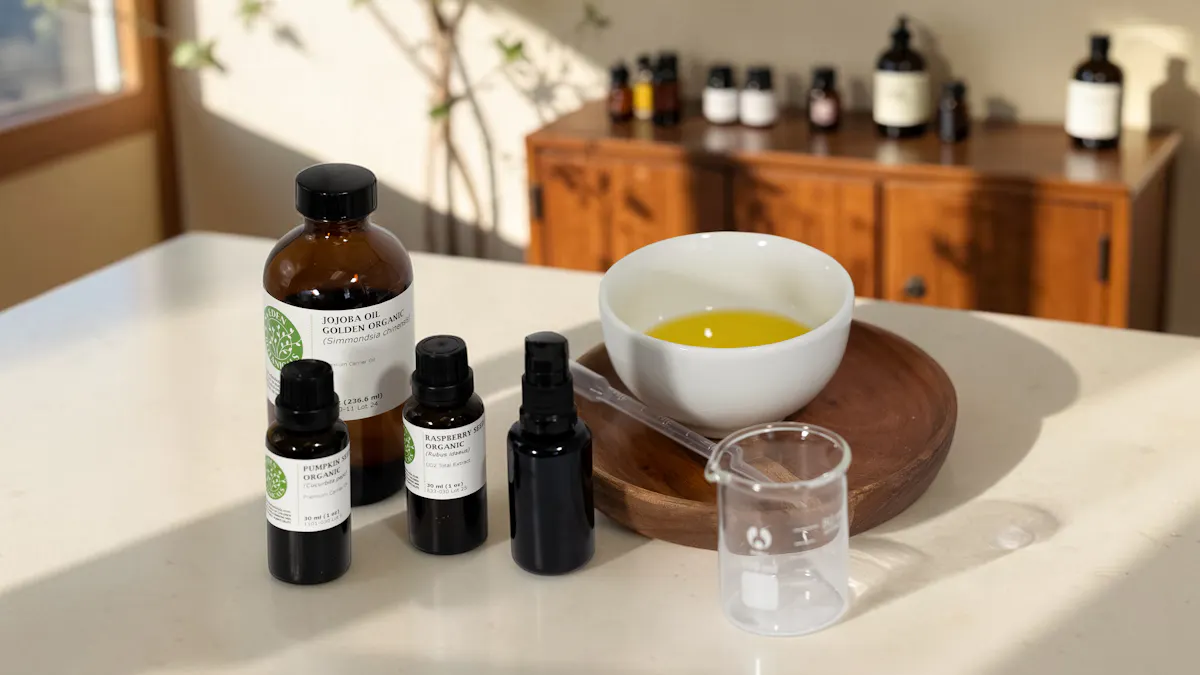
Any of our patchouli oils can be worn as perfume on its own. Always dilute essential oils in a carrier oil such as Jojoba Oil, Golden-Organic or Fractionated Coconut Oil - Organic to reduce the risk of skin sensitization and irritation. Dilution also helps your essential oils go further and holds them on the skin a bit longer. Here are some example dilutions:
· Aromatherapy Roll-on: 5% dilution (about 10 drops of patchouli in 10ml of Jojoba Oil in a rollerball bottle).
· Alcohol or Oil-Based Perfume: approximately 20% dilution (about 150 drops of patchouli to every 1 oz carrier oil or alcohol).
For more information on making perfume, see our article on Natural Perfumery Basics.
Naturally Enduring
Like many complex aromatic materials, the aroma of patchouli means different things to different people, yet its remarkable longevity is something we can all agree upon. With a long history in perfumery, cosmetics, and ritual, it continues to resonate deeply with those who take the time to explore it.
This week, we celebrate Earth Day as over a billion people across the world come together to protect our planet. Patchouli is a beautiful reminder of our connection to the natural world and the trailblazers who came before us who pushed for change. Perhaps we’ll take a moment to honor that connection by enjoying patchouli in an anointing oil, diffuser blend, massage oil, or evening bath, sending out good vibes to our beloved Earth and all who share it.