5 min read
2026-10-13
Carrier Oils for Winter Skin – Nourish, Soften, and Lock in Moisture
Written By: Robin Lander
It may seem far off now, but as they say, winter is coming. It’s never too early to prepare skin for facing the elements ahead. The transition to cooler weather, blustery winds, and dry indoor heat can place extra demands on our skin.
Lipid-rich botanical oils from nourishing nuts and seeds, also known as carrier oils, can be particularly helpful at times like these. Used for centuries in skin and hair care, these natural conditioners can help restore moisture and softness while delivering beneficial fatty acids and antioxidants when you need them most.
Whether you’re exploring carrier oils for yourself or developing seasonal formulations, we’ll cover our top carrier oil picks to help skin look and feel its best through the winter.
What Makes a Carrier Oil Helpful for Winter Skin?
When choosing carrier oils for the colder months, there are three important benefits to look for:
1) Emollience: conditioning properties that soften and smooth the skin.
2) Skin barrier support: lipids that help the skin’s own natural barrier against moisture loss.
3) A lasting lipid layer: oils that linger on the skin’s surface to help slow moisture loss and lend a dewy glow.
While one carrier oil might be all you need, combining three or more can offer a broader range of fatty acids and other beneficial constituents. Blending also allows you to dial in a formula’s texture and feel, from lightweight and silky to velvety and rich.
Best Carrier Oils for Winter Skin
This selection of carrier oils checks all the boxes for winter skin care and includes a variety of textures, from the richest to the most lightweight.
Feel: rich, cushiony
Skin type: all, especially combination, dry, and dull-looking skin
Deeply emollient Baobab is renowned for its skin-softening properties making it an excellent choice for skin that feels tight and dry. Its composition of monounsaturated and polyunsaturated fatty acids helps revitalize dull skin with intense nourishment and a moisture layer that lasts. Baobab Oil is a favorite in facial care, body oils and butters, and hand balms, as well as dry scalp and hair preparations.
Formulation tips: Baobab’s oxidation-resistance makes it a useful ingredient in formulations containing more oxidation-prone oils, helping to increase stability. Due to beneficial plant lipids and waxes naturally present in our premium unrefined Baobab, it may appear to have crystal ‘flakes’ when temperatures fall below 70°F. If this occurs, gently warm the bottle in a bowl of warm water, then shake to homogenize.
Feel: medium-weight, velvety
Skin type: all, especially dry and mature skin
Emollient and brightening Pumpkin Seed Oil helps soften mature, dry, or congested skin while improving the appearance of tone, texture, and dark spots. Phytosterols and beneficial fatty acids like palmitic and linoleic help support the skin’s protective barrier against moisture loss and impurities. Vitamin E and carotenoids support skin elasticity.
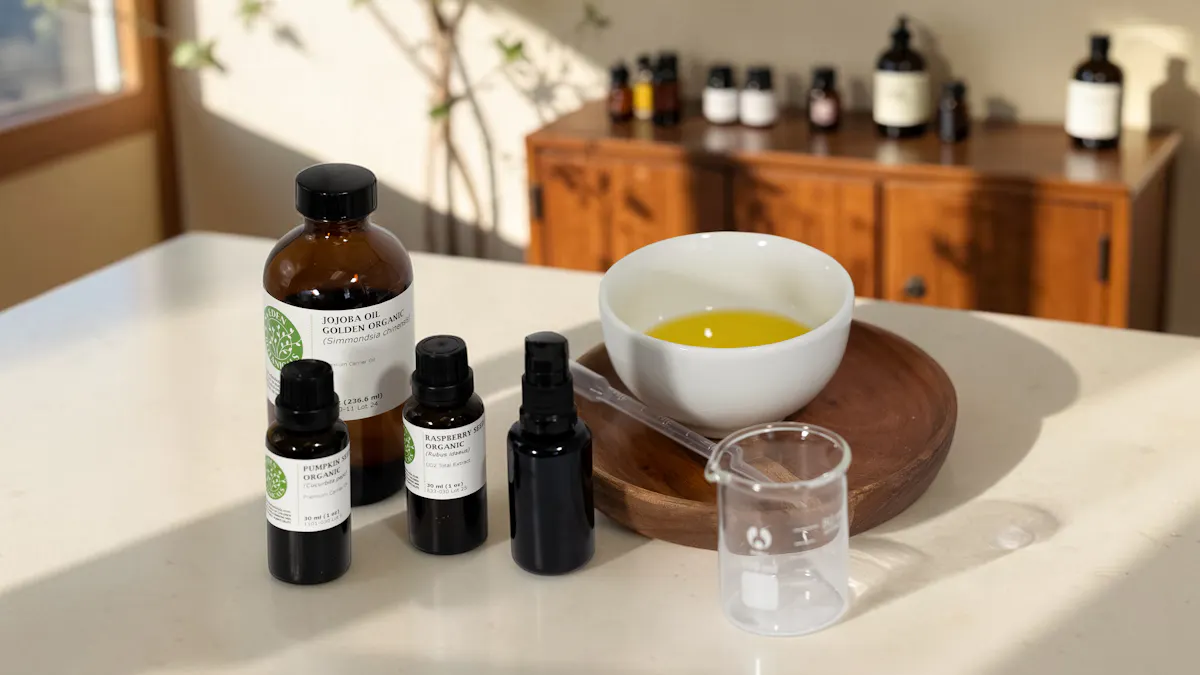
Formulation tips: While Pumpkin Seed Oil feels wonderfully smooth when applied directly to the skin, it can be paired with other carrier oils to adjust the texture and finish. For a dryer, silkier feel, blend it with oils like Argan Oil – Organic or Cacay Seed Oil. For a richer, creamier touch, combine it with Jojoba Oil, Golden-Organic or Baobab Oil – Organic.
Get our seasonal recipe for a Spiced Pumpkin Seed Body Oil here.
Feel: medium-lightweight, silky
Skin type: all, especially dry and sensitive skin
With a remarkable similarity to the wax esters found in human sebum, Jojoba is a top pick for winter skin. It leaves a breathable, long-lasting layer, helping the skin’s natural barrier retain moisture. Beneficial for all skin types from oily and congested to dry and mature, Jojoba gently softens without feeling heavy or greasy.
Formulation tips: Because of its extraordinary oxidation resistance, pair Jojoba Oil with more oxidation-prone oils high in polyunsaturated fatty acids, such as Raspberry Seed CO2 – Organic and Rosehip Seed CO2 – Organic. Including Jojoba in a blend can help balance the feel of the formula while contributing to overall stability.
Feel: medium-lightweight, dry-silky
Skin type: all, especially oily, congested, combination, and uneven-looking skin
This nourishing, ‘dry’ oil from Morocco is popular for its ability to deeply soften and condition without greasiness. Argan Oil contains a high concentration of Vitamin E (tocopherols) and a form of Vitamin A (carotenes), vital components for maintaining beautiful skin and hair. Highly versatile, Argan can also be applied to hair to soften and add shine, protect from heat, and help reduce frizz and breakage.
Formulation tips: Our organic Argan Oil is cold pressed from raw kernels and then gently deodorized to preserve its active nutrients and beneficial antioxidants, providing a mild to neutral aroma for your formulations. Argan can be used on its own, but those with dry or mature skin may prefer to use it at 5-20% in combination with a richer oil like Baobab Oil – Organic or Pumpkin Seed Oil – Organic.
Feel: lightweight, silky
Skin type: all, especially sensitive, congested, or oily skin
For skin that prefers a lighter finish, Plum Kernel Oil delivers a delicate layer of lubrication along with an irresistible sweet, fruity, almond marzipan-like aroma. This silky-smooth carrier oil contains full-spectrum vitamin E for antioxidant-rich conditioning and beneficial fatty acids to support moisture-retention. By upcycling kernels remaining from plum processing, Plum Kernel Oil is a luxurious organic option for sustainable body care.
Formulation tips: Plum Kernel is a luscious addition to facial serums, lip care, hair and scalp preparations, and body oils. Its stability and nourishing elements also make it a perfect addition to eye creams and baby care products. While Plum Kernel Oil can be used directly on the skin, just 5-10% in a blend may be enough to experience its delicious aroma.
Feel: lightweight, dry
Skin type: all, especially dry, uneven, and mature-looking skin
Widely celebrated as a natural alternative to retinol, Cacay Seed Oil is packed with retinoids (precursors to vitamin A), prized for their ability to smooth, clarify, and brighten the skin’s appearance. Regular application of Cacay helps skin appear even-toned, supple, and more rested. Its high linoleic acid content supports the skin’s natural barrier while its dry texture feels light and clean.
Formulation tips: When used in facial formulas, especially for the eye area, Cacay offers deeply nourishing, emollient properties to help lock in moisture without overwhelming delicate skin. To increase formula stability, combine Cacay with more oxidation resistant Jojoba Oil, Golden-Organic, Baobab Oil – Organic, and/or Argan Oil – Organic.
Feel: lightweight, dry
Skin type: all, especially dry, uneven, and dull-looking skin
Beautifully light and non-occlusive, Raspberry Seed CO2 moisturizes and softens the skin quickly without leaving a heavy finish. Its calming properties feel wonderful after a day spent outdoors or in dry indoor heat. Raspberry Seed is highly prized in cosmetic applications for its beneficial polyunsaturated fatty acids that help support the skin’s moisture barrier and elasticity and improve the appearance of dark spots and environmental exposure.
Formulation tips: CO2 extraction generally offers a longer shelf life than cold pressed carrier oils. However, due to its delicate and lightweight nature, try Raspberry Seed CO2 at 5-20% in a blend with other more stable oils like Jojoba Oil, Golden - Organic. Its slightly fruity-tart aroma also pairs well with Plum Kernel Oil – Organic.
Blending for Winter Skin
To achieve a good balance of fatty acids, antioxidants, conditioning properties, oxidative stability, and textural feel, consider combining three or more carrier oils in a facial or body oil.
If you need help understanding how to formulate a blend tailored to your skin’s needs, please see our article: How to Formulate a Facial Oil – A Step-by-Step Guide.
Application Tips
Carrier oils perform and feel best when applied to slightly damp skin. Because oils are ‘hydrophobic’ (they naturally move away from water), pairing them with a light layer of moisture helps them spread easily, leaving your skin feeling smooth and soft rather than greasy.
To use, apply a few drops of carrier oil or a formulated carrier oil blend to damp skin after cleansing, or to skin that has been lightly spritzed with a Hydrosol such Rose Hydrosol - Organic or Cucumber Hydrosol - Organic. Gently press or massage the oil into your skin.
Article Reference & Suggested Reading
Shutes, Jade and Sherilyn Siegmund-Roach, The Carrier Oil Palette: Fixed Oils, Butters, Herbal Oils, and CO2 Extracts of the Carrier Oil Palette, 2022.