Solubility & Blending Suggestions

  • Dilute well and add drop by drop to your blends until the desired effect is achieved.
  • Soluble in fixed (carrier) oils and alcohol.
  • “Introduces fresh notes in fougères, chypres, aldehydic perfume bases, colognes, and spicy men’s fragrances…” It can be used in small amounts to lift and fix top notes; it also has relatively good tenacity.*
  • *Arctander, Steffen, Perfume and Flavor Materials of Natural Origin, 1960, p. 571.

    Suggested Resources

    • The Complete Guide to Aromatherapy, 3rd ed., Vol. I, Salvatore Battaglia, 2018, pp. 516-521.
    • Aromatherapeutic Blending – Essential Oils in Synergy, Jennifer Peace Rhind, 2016, pp. 92, 158, 183, 244-5.
    • Fragrance and Wellbeing, Jennifer Peace Rhind, 2014, p. 246.
    • Advanced Aromatherapy, Kurt Schnaubelt, 1995, pp. 43-44, 45, 49, 89.

    Sage - Organic EO

    Salvia officinalis L.

    (9)

    SKU 900-G sizes:

    Sample 1 ml (1/30 oz)
    $3.00
    15 ml (1/2 oz)
    $13.00
    30 ml (1 oz)
    $21.50
    59.14 ml (2 oz)
    $37.75
    118.29 ml (4 oz)
    $65.50
    236.58 ml (8 oz)
    $117.25
    473.17 ml (16 oz)
    $213.00
    1 kg (2 1/5 lb)
    $444.00

    Contact us for bulk inquiries.

    Botanical NameSalvia officinalis L.
    Suggested UseAromatherapy, Perfumery, Cosmetics, Soapmaking, Candle Crafting
    INCI NameSalvia Officinalis Oil
    CAS Number8022-56-8
    OriginVarious
    Extraction MethodSteam Distilled
    CultivationCertified Organic
    Plant Partleaves.
    Notetop, middle.
    Aroma Familycamphorous, herbaceous.
    Aroma ProfileVery strong, highly diffusive, fresh, warm, camphoraceous / herbaceous, clear aroma.
    AppearanceColorless, transparent, mobile liquid.
    Shipping Restriction3 – Flammable

    Safety Considerations

    • Caution: contains Thujone; overuse of Thujone may result in convulsions.* Avoid use with children less than 10 years of age, the elderly, those with epilepsy, and during pregnancy and/or nursing.** If you have a medical condition or are taking medication, please consult with a physician before use. Use with appropriate caution. Not for ingestion. Keep out of reach of children.
    • Dilute well before using. A patch test should be performed before use for those with sensitive skin.
    • Store in a cool, dark place away from heat and light.
    • *Tisserand, Robert and Rodney Young. Essential Oil Safety, 2nd ed., 2014, p. 414.
    • **Ibid.

    Sage - Organic EO

    Salvia officinalis L.

    (9)

    We are very pleased to offer this organic Sage with its very strong, highly diffusive, fresh, warm, camphoraceous/herbaceous and clear aroma - without doubt one of the best we have ever sourced. The quality of this remarkable Sage essential oil is revealed

    Size

    Selected size SKU:900-016 - Sage - Organic 15 ml (1/2 oz) (w/ orifice reducer)

    Sample 1 ml (1/30 oz)
    $3.00
    15 ml (1/2 oz)
    $13.00
    with orifice reducer
    30 ml (1 oz)
    $21.50
    59.14 ml (2 oz)
    $37.75
    118.29 ml (4 oz)
    $65.50
    236.58 ml (8 oz)
    $117.25
    473.17 ml (16 oz)
    $213.00
    1 kg (2 1/5 lb)
    $444.00
    $3.00
    Details
    Solubility & Blending Suggestions
    Suggested Resources
    Safety Considerations
    Certificates of Analysis (COA)
    Documentation

    Product Overview

    We are very pleased to offer this organic Sage with its very strong, highly diffusive, fresh, warm, camphoraceous/herbaceous and clear aroma - without doubt one of the best we have ever sourced. The quality of this remarkable Sage essential oil is revealed in the exact expression of its predominant chemotype characteristics and properties, and even more so, in the quality of its aroma. It is sparkling, crystalline and jewel-like in its ethereal clarity, affirming the presence of the plant’s most precious components – even the most volatile molecules – captured in liquid form.

    (also known as Dalmatian or Common Sage)

    Our organic Salvia officinalis has a high thujone content[1] and should be used with appropriate caution and in low concentrations by informed individuals. Thujone, a monoterpene ketone, can be toxic when improperly used. Camphor (a ketone also known as borneone) and eucalyptol (aka cineole) are also present in substantial percentages.[2] The essential oil of Sage can be added to diffusers or room sprays to refresh home and office environments. For body workers, a drop rubbed between the hands quickly cleanses and clears energy between clients.

    1 Industry communication.

    2 Ibid.
    Product Overview

    We are very pleased to offer this organic Sage with its very strong, highly diffusive, fresh, warm, camphoraceous/herbaceous and clear aroma - without doubt one of the best we have ever sourced. The quality of this remarkable Sage essential oil is revealed in the exact expression of its predominant chemotype characteristics and properties, and even more so, in the quality of its aroma. It is sparkling, crystalline and jewel-like in its ethereal clarity, affirming the presence of the plant’s most precious components – even the most volatile molecules – captured in liquid form.

    (also known as Dalmatian or Common Sage)

    Our organic Salvia officinalis has a high thujone content[1] and should be used with appropriate caution and in low concentrations by informed individuals. Thujone, a monoterpene ketone, can be toxic when improperly used. Camphor (a ketone also known as borneone) and eucalyptol (aka cineole) are also present in substantial percentages.[2] The essential oil of Sage can be added to diffusers or room sprays to refresh home and office environments. For body workers, a drop rubbed between the hands quickly cleanses and clears energy between clients.

    1 Industry communication.

    2 Ibid.

    logo

    2017-03-29

    Trip to Spain

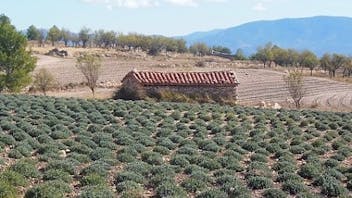
    Our week long journey began in Barcelona and took us from the historic region of Catalonia to Valencia, Murcia, Castilla/La Mancha, Andalucía, Estremadura and finally back to the capital city, Madrid -- a drive of nearly 2000 km along the Iberian Peninsula.

    logo

    2013-08-14

    Yogaromatherapy

    If you consider that true essential oils from plants - hydrated and nourished by sun, water and soil, tended and distilled with human hands -- represent the “life force”, or prana, of plants,

    logo

    2026-03-27

    Why You Need Mushroom in Your Perfume

    There’s a dirty little secret known to experienced perfumers: the most intriguing fragrances always contain something a little ‘off.’ Historically, formulators used animal-derived aromas like ambergris, civet, and castoreum, now mostly replaced by synthetic versions. But perfumers still rely on the funky facets in botanicals...