6 min read
2026-05-15
Carrier Oils by Skin Type: Dry, Oily, and In Between
Written By: Robin Lander
We all want the best when it comes to our skin… but where do we start? Whether we’re choosing ingredients for our own complexion or formulating a product, the plentitude of options can feel overwhelming. One thing is certain, whether skin is dry, oily, or somewhere in between, all skin types benefit from nourishing moisturization.
Finding an effective, natural, botanical-based moisturizer doesn’t have to be complicated. Since ancient times, people have used botanical-derived fats and oils to condition, soften, and clarify the skin. These fixed, or “carrier,” oils obtained from nuts and seeds are rich in nutrients, antioxidants, and fatty acids that help hydrate the skin and support its natural barrier against moisture loss.
In this article, we’ll explore the composition of our premium carrier oil offerings and how to select them based on skin type.
Beneficial Fatty Acids – A Brief Overview
Fats and oils are composed of about 95% fatty acids, molecules made up of carbon, hydrogen, and oxygen. The way these atoms are arranged determines whether a fatty acid is saturated or unsaturated.
Most carrier oils consist primarily of unsaturated fatty acids, which fall into two categories: monounsaturated and polyunsaturated. Whether an oil is higher in one or the other – or contains a balance of the two – determines its benefits, stability, conditioning properties, and how it feels on the skin.
Monounsaturated Fatty Acids for Dry Skin
Monounsaturated fatty acids are among the most common lipids found in nature, present in both plants and animals. Some are produced by our sebaceous glands and form part of our skin’s sebum. They play an important role in maintaining our skin by supporting a moisture-retaining barrier. Examples include oleic, palmitoleic, and gondoic acids.
Dry and mature skin respond especially well to monounsaturated fatty acids because they:
· Slowly and deeply moisturize with long-lasting hydration
· Are emollient, helping create an occlusive layer to lock in moisture
· Support the skin’s own protective barrier against environmental impurities
· Improve the appearance of elasticity and fine lines
· Enhance softness, smooth skin texture, and ease the feeling of tightness
Carrier Oils High in Monounsaturated Fatty Acids
Carrier oils rich in monounsaturated fatty acids are beneficial for most skin types but are particularly well suited for dry and mature skin. Their molecular structure also makes them more resistant to oxidation, contributing to a longer shelf life that can improve the stability of your formulations.
Sunflower Oil - Organic – With about 85% oleic acid and high levels of vitamin E, Sunflower Oil helps lock in moisture and impart suppleness. It’s also a favorite for dry scalp and hair.
Camellia Seed Oil – Organic – Also known as Tea Seed Oil, it has around 80% oleic acid, vitamins A and E, and natural tannins that help retain moisture and elasticity and lend a lightly astringent ‘dry’ oil feel.
Moringa Oil - Organic – Containing approximately 80% oleic acid and high amounts antioxidants like vitamin E, Moringa provides deep hydration and helps improve the appearance of mature skin.
Marula Oil – Organic – This nut oil from Africa has around 75% oleic acid, phenolic compounds, antioxidants, and excellent stability. It has an ultra-smooth slip that is especially softening and hydrating.
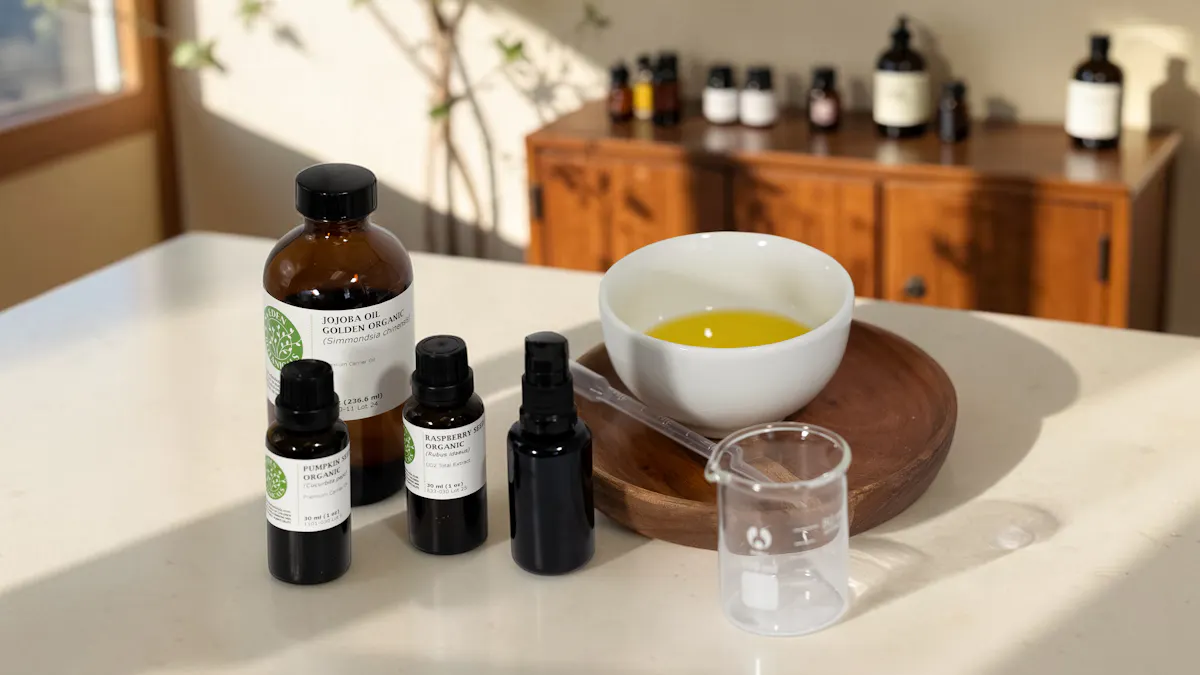
Jojoba Oil, Golden-Organic – Rather than fatty acids, Jojoba is 97% monounsaturated wax esters closely resembling human sebum. It’s ideal for dry and sensitive skin and an uneven or dull complexion.
Polyunsaturated Fatty Acids for Oily Skin
Polyunsaturated fatty acids are abundant in nuts and seeds. Linoleic and alpha-linolenic acids are especially important because our bodies cannot produce them. Called essential fatty acids (EFAs), they nourish our skin when we apply them topically.
These fatty acids play a key role in maintaining skin clarity and comfort. Oily and congested skin can be improved by linoleic acid because it helps thin our natural sebum.
Additional examples that are not EFAs include gamma-linolenic and punicic acids.
Polyunsaturated fatty acids are nourishing for all skin types, however they are particularly suited for oily, congested, and sensitive skin because they:
· Moisturize the skin quickly with deep hydration
· Are less likely to clog pores
· Support the skin’s own protective barrier against moisture loss
· Help improve the appearance of dark spots and imperfections
· Calm and clarify to help balance skin tone
Carrier Oils High in Polyunsaturated Fatty Acids
Many of these carrier oils have a lighter texture or ‘dry’ feel that is favored for oily, congested, and sensitive skin. However, their molecular structure makes them more prone to oxidation. In formulas, it’s best to include them in smaller amounts and in combination with more stable monounsaturated oils.
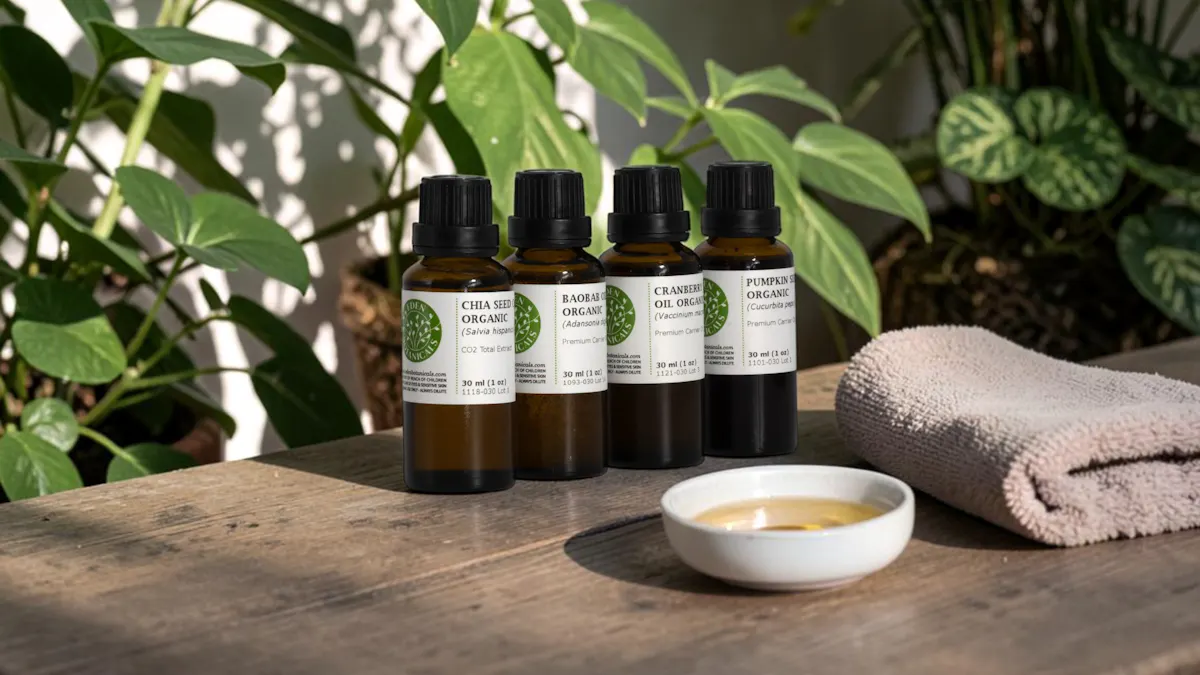
Chia Seed CO2 - Organic - With over 60% alpha-linolenic acid, Chia is one of the richest plant-based sources of this valuable EFA renowned for improving the appearance of skin tone and texture. It has a lightweight and silky feel.
Raspberry Seed CO2 – Organic – Containing over 80% essential fatty acids, this exceptionally light, dry, non-occlusive oil quickly moisturizes and nourishes the skin without greasiness.
Strawberry Seed Oil - Organic – Rich in linoleic and alpha-linolenic acids, vitamin E, and carotenoids, Strawberry deeply hydrates, helps support skin elasticity, and improves the appearance of imperfections.
Rosehip Seed CO2 – Organic - Renowned as a skin-revitalizer due to the presence of alpha-linolenic and linoleic acids, vitamin E, all-trans retinoic acid (a form of vitamin A), phytosterols, and oleic acid.
Pomegranate Seed CO2 - Organic – Rich in punicic acid, a fatty acid unique to pomegranates, it supports elasticity, helps maintain oil balance, and improves the appearance of uneven tone.
Other options: Prickly Pear Seed Oil - Organic and Cacay Seed Oil.
A Combination for Beauty
Some carrier oils contain a balance of both polyunsaturated and monounsaturated fatty acids, providing nourishment and versatility across all skin types, especially combination skin. This blend of molecular structure generally gives these oils good stability.
Carrier Oils with a Balanced Fatty Acid Profile
Argan Oil – Organic - This nourishing and vitamin E-rich ‘dry’ oil from Morocco is popular in mature, oily, and congested skin preparations where it deeply moisturizes without greasiness.
Baobab Oil – Organic – Gentle for all skin types, Baobab contains a balanced combination of unsaturated fatty acids, is highly stable, and helps revitalize dull skin.
Pumpkin Seed Oil – Organic – Emollient and brightening Pumpkin Seed softens mature, dry or congested skin while refining tone and texture and improving the appearance of dark spots.
Cranberry Seed Oil - Organic – Containing a balance oleic, linoleic, and alpha-linolenic fatty acids at about 30% each, vitamin E, polyphenols such as quercetin, and provitamin A carotenoids, Cranberry helps improve the appearance of mature and sun-exposed skin.
Sandalwood Nut CO2 – With about 50% oleic acid and 35% polyunsaturated ximenynic acid, this lightweight ‘dry’ oil improves the appearance of elasticity and calms skin and scalp.
Other carrier oil options: Sea Buckthorn CO2 - Organic, Tamanu (Foraha) Oil - Organic, Carrot Seed Oil, Plum Kernel Oil – Organic.
Finding Your Perfect Combination
Depending on your skin’s needs, you may be drawn to oils higher in monounsaturated fatty acids for dry and mature skin, or those richer in polyunsaturated acids for oily, congested, and sensitive skin. You may also benefit from oils that offer a balance of both.
Ultimately, the most versatile and well-rounded formulations combine at least 3-5 carrier oils selected for their nutrient profile, texture, stability, and feel. Blending across categories allows you to create your own customized products for facial and body care.
If you’d like to formulate your own facial oil tailored to your skin’s unique needs, see our article: How to Formulate a Facial Oil – A Step-by-Step Guide.
References:
The Carrier Oil Palette: Fixed Oils, Butters, Herbal Oils, and CO2 Extracts of the Carrier Oil Palette, Jade Shutes and Sherilyn Siegmund-Roach, 2022.
Power of the Seed, Susan M Parker, 2014.
Liquid Sunshine – Vegetable Oils for Aromatherapy, Jan Kusmirek, 2002.