Solubility & Blending Suggestions

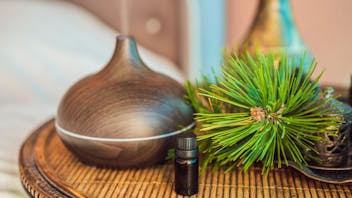
  • Dilute well and add drop by drop to your blends until the desired effect is achieved.
  • Soluble in alcohol and fixed (carrier) oils.
  • E. radiata is "of some interest to perfumery because of its great masking effect … it has a pleasant dryout but little or no fixative effect."*
  • *Arctander, Steffen. Perfume and Flavor Materials of Natural Origin, 1960, p. 226.

    Suggested Resources

    • L'Aromathérapie Exactement, Pierre Franchomme and Dr. Daniel Pénoël, 1990, p. 352.
    • Essential Oils – A Handbook for Aromatherapy Practice, Jennifer Peace Rhind, 2012, p. 190.
    • Aromatherapeutic Blending: Essential Oils in Synergy, Jennifer Peace Rhind, 2016, p. 266.
    • Aromatherapy for Health Professionals, 2nd ed., Shirley and Len Price, 1999, pp. 325-6.
    • Advanced Aromatherapy, Kurt Schnaubelt, 1998, p. 67.
    • Aromatherapy – An A - Z, Patricia Davis, 1988, p. 113.

    Eucalyptus Narrow Leaf - Organic EO

    Eucalyptus radiata A. Cunn. ex DC.

    (7)

    SKU 299-G sizes:

    Sample 1 ml (1/30 oz)
    $3.00
    15 ml (1/2 oz)
    $11.00
    30 ml (1 oz)
    $16.75
    59.14 ml (2 oz)
    $25.25
    118.29 ml (4 oz)
    $37.50
    236.58 ml (8 oz)
    $66.00
    473.17 ml (16 oz)
    $118.50
    1 kg (2 1/5 lb)
    $254.50

    Contact us for bulk inquiries.

    Botanical NameEucalyptus radiata A. Cunn. ex DC.
    Suggested UseAromatherapy, Perfumery, Cosmetics, Soapmaking, Candle Crafting
    INCI NameEucalyptus Radiata (Eucalyptus) Leaf/Stem Oil
    CAS Number92201-64-4
    OriginSouth Africa
    Extraction MethodSteam Distilled
    CultivationCertified Organic
    Plant Partleaves.
    Notetop.
    Aroma Familycineolic, fresh.
    Aroma ProfileRefreshing, very diffusive, cineolic with subtle citrus and peppery-floral overtones.
    AppearanceColorless, transparent, mobile liquid.
    Shipping Restriction3 – Flammable

    Safety Considerations

    • Although we consider Eucalyptus – Narrow Leaf to be the least problematic of our cineole-rich Eucalyptus oils for aromatherapy use, we recommend using it with caution. Do not apply to or near the face of infants or children under 10 years of age.* In general, Eucalyptus Narrow Leaf is preferred, when diluted and used with caution, for sensitive individuals and children. Tisserand recommends a maximum dermal use level of up to 20%.** However, we recommend a much lower maximum dermal use level of 5-10%.
    • Dilute before using. A patch test should be performed before use for those with sensitive skin.
    • Store in a cool, dark place away from heat and light.
    • *Tisserand, Robert and Rodney Young. Essential Oil Safety, 2nd ed., 2014, p. 273.
    • **Ibid.

    Eucalyptus Narrow Leaf - Organic EO

    Eucalyptus radiata A. Cunn. ex DC.

    (7)

    The pleasant smell and valuable profile of constituents of our organic Narrow Leaf Eucalyptus makes it our favorite Eucalyptus essential oil – its aroma is refreshing, very diffusive, cineolic, with subtle citrus and peppery-floral overtones.

    Size

    Selected size SKU:299-016 - Eucalyptus, Narrow Leaf - Organic 15 ml (1/2 oz) (w/ orifice reducer)

    Sample 1 ml (1/30 oz)
    $3.00
    15 ml (1/2 oz)
    $11.00
    with orifice reducer
    30 ml (1 oz)
    $16.75
    59.14 ml (2 oz)
    $25.25
    118.29 ml (4 oz)
    $37.50
    236.58 ml (8 oz)
    $66.00
    473.17 ml (16 oz)
    $118.50
    1 kg (2 1/5 lb)
    $254.50
    $3.00
    Details
    Solubility & Blending Suggestions
    Suggested Resources
    Safety Considerations
    Certificates of Analysis (COA)
    Documentation

    Product Overview

    The pleasant smell and valuable profile of constituents of our organic Narrow Leaf Eucalyptus makes it our favorite Eucalyptus essential oil – its aroma is refreshing, very diffusive, cineolic, with subtle citrus and peppery-floral overtones. Narrow Leaf Eucalyptus, Eucalyptus radiata, is also known as Grey, Black or Narrow-Leaved Peppermint Eucalyptus; its aroma is more complex and generally more pleasing than the aroma of Blue Gum Eucalyptus (Eucalyptus globulus). It is commonly the Eucalyptus of choice, when used with caution and properly diluted, for use with children and sensitive individuals.

    For hundreds of years, the Aborigines of Australia have used the leaves of Eucalyptus for various incense and skincare applications. The radiata species of Eucalyptus has a compact crown, dense canopy and thin papery bark shredding in long, colorful ribbons. It was the first of the Eucalyptus species (then known as E. amygdalina[1]) commercially utilized for oil production in Australia in the mid-1800s. Since then, other Eucalyptus species (namely E. globulus, E. polybractea and E. australiana) have superseded E. radiata with regard to higher yields of oil, and it is from these species that most of the current Australian Eucalyptus oils of commerce are now produced.

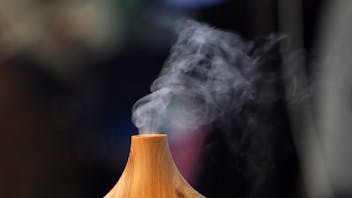
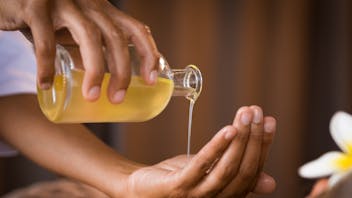
    Like other Eucalyptus types, Narrow Leaf Eucalyptus is suited for diffusion into the air, outdoor sprays, joint and muscle massage, chest rubs, foot lotions, and oily scalp and skin preparations. With its unique and highly beneficial combination of terpene alcohols, cineole, and the aldehydes neral and geraniol, Kurt Schnaubelt suggests that Eucalyptus radiata could be considered an aromatherapist’s “designer oil” due to its broad effects, attractive price point, and exceptionally pleasant aroma.[2]

    Please Note: Although we consider Eucalyptus – Narrow Leaf to be the least problematic of our cineole-rich Eucalyptus oils for aromatherapy use, we recommend using it with caution. The primary constituent in Eucalyptus Narrow Leaf (E. radiata) is 1,8-cineole, a potent and volatile oxide. However, E. radiata has percentages of moderately volatile and extremely gentle constituents that mediate the intensity of 1,8-cineole.

    1 Boland, DJ, JJ Brophy and APN House. Eucalyptus Leaf Oils, 1991.

    2 Schnaubelt, Kurt. Advanced Aromatherapy, 1998, p. 67.
    Product Overview

    The pleasant smell and valuable profile of constituents of our organic Narrow Leaf Eucalyptus makes it our favorite Eucalyptus essential oil – its aroma is refreshing, very diffusive, cineolic, with subtle citrus and peppery-floral overtones. Narrow Leaf Eucalyptus, Eucalyptus radiata, is also known as Grey, Black or Narrow-Leaved Peppermint Eucalyptus; its aroma is more complex and generally more pleasing than the aroma of Blue Gum Eucalyptus (Eucalyptus globulus). It is commonly the Eucalyptus of choice, when used with caution and properly diluted, for use with children and sensitive individuals.

    For hundreds of years, the Aborigines of Australia have used the leaves of Eucalyptus for various incense and skincare applications. The radiata species of Eucalyptus has a compact crown, dense canopy and thin papery bark shredding in long, colorful ribbons. It was the first of the Eucalyptus species (then known as E. amygdalina[1]) commercially utilized for oil production in Australia in the mid-1800s. Since then, other Eucalyptus species (namely E. globulus, E. polybractea and E. australiana) have superseded E. radiata with regard to higher yields of oil, and it is from these species that most of the current Australian Eucalyptus oils of commerce are now produced.

    Like other Eucalyptus types, Narrow Leaf Eucalyptus is suited for diffusion into the air, outdoor sprays, joint and muscle massage, chest rubs, foot lotions, and oily scalp and skin preparations. With its unique and highly beneficial combination of terpene alcohols, cineole, and the aldehydes neral and geraniol, Kurt Schnaubelt suggests that Eucalyptus radiata could be considered an aromatherapist’s “designer oil” due to its broad effects, attractive price point, and exceptionally pleasant aroma.[2]

    Please Note: Although we consider Eucalyptus – Narrow Leaf to be the least problematic of our cineole-rich Eucalyptus oils for aromatherapy use, we recommend using it with caution. The primary constituent in Eucalyptus Narrow Leaf (E. radiata) is 1,8-cineole, a potent and volatile oxide. However, E. radiata has percentages of moderately volatile and extremely gentle constituents that mediate the intensity of 1,8-cineole.

    1 Boland, DJ, JJ Brophy and APN House. Eucalyptus Leaf Oils, 1991.

    2 Schnaubelt, Kurt. Advanced Aromatherapy, 1998, p. 67.
    Blends Well With

    logo

    2017-06-13

    About Aromatic Diffusers

    For the most part, 100% pure, undiluted Essential Oils may be diffused with several important guidelines. If unsure about the diffusibility of an Essential Oil,

    logo

    2015-12-16

    Winter Recipes

    We all deserve a little pampering before, during and after the holidays. This time of year often means stress, dry skin and a chill in the bones. 

    logo

    2013-10-25

    Diffusing the Situation: Aromatic Diffusers for Any Space or Place

    Aromatherapy diffusers do just what their name implies, they diffuse aromas throughout a room for fragrancing and aromatherapy purposes.