
Solubility & Blending Suggestions

  • Dilute before use and add drop by drop to your blends until the desired effect is achieved.
  • Soluble in both fixed (carrier) oils and 190 proof alcohol; not soluble in water.
  • In trace amounts, Niaouli elevates top notes and adds ‘lift’ to perfume compositions.*
  • *Private communication.

    Suggested Resources

    • Advanced Aromatherapy, Kurt Schnaubelt, 1998, p. 82.
    • L’Aromathérapie Exactement, Pierre Franchomme and Dr. Daniel Pénoël, 1990, p. 370-71.
    • Essential Oils – A Handbook for Aromatherapy Practice, Jennifer Peace Rhind, 2012, pp. 194-5, 290.
    • Aromatherapeutic Blending – Essential Oils in Synergy, Jennifer Peace Rhind, 2016, pp. 138, 156, 267.

    Niaouli - Organic EO

    Melaleuca quinquenervia viridiflora ct cineole (MQV) [synonym of Melaleuca quinquenervia (Cav.) S.T.Blake]

    (1)

    SKU 665-G sizes:

    Sample 1 ml (1/30 oz)
    $3.00
    15 ml (1/2 oz)
    $9.75
    30 ml (1 oz)
    $12.00
    59.14 ml (2 oz)
    $19.25
    118.29 ml (4 oz)
    $31.00
    236.58 ml (8 oz)
    $47.75
    473.17 ml (16 oz)
    $90.25
    1 kg (2 1/5 lb)
    $177.75

    Contact us for bulk inquiries.

    Botanical NameMelaleuca quinquenervia viridiflora ct cineole (MQV) [synonym of Melaleuca quinquenervia (Cav.) S.T.Blake]
    Suggested UseAromatherapy,Perfumery, Cosmetics, Soap Making
    INCI NameMelaleuca Viridiflora Leaf Oil
    CAS Number8014-68-4
    OriginMadagascar
    Extraction MethodSteam Distilled
    CultivationCertified Organic
    Plant Partleaves.
    Notetop.
    Aroma Familycineolic, herbaceous.
    Aroma ProfileFresh, strong, highly diffusive, cineolic aroma.
    AppearanceColorless, transparent, mobile liquid.
    Shipping Restriction9 – Misc. Hazard

    Safety Considerations

    • No known concerns.*
    • Dilute before using.
    • A patch test should be performed before use for those with sensitive skin.
    • Store in a cool, dark place away from heat and light.
    • *Tisserand, Robert and Rodney Young. Essential Oil Safety, 2nd ed., 2014, pp. 365-6.

    Niaouli - Organic EO

    Melaleuca quinquenervia viridiflora ct cineole (MQV) [synonym of Melaleuca quinquenervia (Cav.) S.T.Blake]

    (1)

    Our organically grown Niaouli essential oil displays a fresh, strong, highly diffusive, cineolic aroma. It is referred to as MQV (an abbreviation of its botanical name), a trade name the oil acquired when it was often used by the great French researcher in essential oils, Pierre Franchomme.[1] 

    Size

    Selected size SKU:665-016 - Niaouli - Organic 15 ml (1/2 oz) (w/ orifice reducer)

    Sample 1 ml (1/30 oz)
    $3.00
    15 ml (1/2 oz)
    $9.75
    with orifice reducer
    30 ml (1 oz)
    $12.00
    59.14 ml (2 oz)
    $19.25
    118.29 ml (4 oz)
    $31.00
    236.58 ml (8 oz)
    $47.75
    473.17 ml (16 oz)
    $90.25
    1 kg (2 1/5 lb)
    $177.75
    $3.00
    Details
    Solubility & Blending Suggestions
    Suggested Resources
    Safety Considerations
    Certificates of Analysis (COA)
    Documentation

    Product Overview

    Our organically grown Niaouli essential oil displays a fresh, strong, highly diffusive, cineolic aroma. It is referred to as MQV (an abbreviation of its botanical name), a trade name the oil acquired when it was often used by the great French researcher in essential oils, Pierre Franchomme.[1] The Melaleucas, like most of the Eucalyptus species, offered centuries of reliable and regional usage for indigenous peoples, yet they remain familiar botanicals for modern generations – appearing in chest and muscle rubs, aromatherapy blends, and personal care products today.

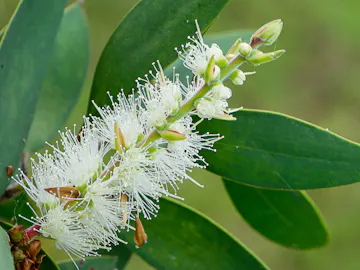
    Melaleuca quinquenervia viridiflora is a tall tree native to the Moluccas that also grows abundantly in much of Indonesia, New Caledonia and southern Papua New Guinea, Australia and Madagascar.[2],[3] It is one of three important species of the genus Melaleucathat are used for essential oil, the other two being M. alternifolia (Tea Tree) and M. cajuputi (Cajuput), and the fourth, M. ericifolia (Rosalina).[4]

    With some initial confusion around the original botanical name, it was eventually determined that up to six distinct chemotypes of this oil exist, as a result of varied ecological terrain, with high percentages of one of the following constituents: 1,8-cineole, (E)-nerolidol (aka Nerolina), methyleugenol, methylisoeugenol, linalool and viridiflorol. Our organic Niaouli is the1,8-cineole chemotype that is predominant within Madagascar.

    1 Schnaubelt, Kurt. Advanced Aromatherapy, 1998, p. 82.

    2 Rhind, Jennifer Peace. Essential Oils – A Handbook for Aromatherapy Practice, 2012, p. 192.

    3 Sellar, Wanda. The Directory of Essential Oils, 1992, p. 112.

    4 Rhind, Jennifer Peace. Essential Oils – A Handbook for Aromatherapy Practice, 2012, p. 192.
    Product Overview

    Our organically grown Niaouli essential oil displays a fresh, strong, highly diffusive, cineolic aroma. It is referred to as MQV (an abbreviation of its botanical name), a trade name the oil acquired when it was often used by the great French researcher in essential oils, Pierre Franchomme.[1] The Melaleucas, like most of the Eucalyptus species, offered centuries of reliable and regional usage for indigenous peoples, yet they remain familiar botanicals for modern generations – appearing in chest and muscle rubs, aromatherapy blends, and personal care products today.

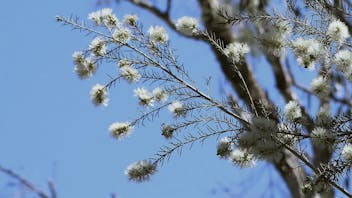
    Melaleuca quinquenervia viridiflora is a tall tree native to the Moluccas that also grows abundantly in much of Indonesia, New Caledonia and southern Papua New Guinea, Australia and Madagascar.[2],[3] It is one of three important species of the genus Melaleucathat are used for essential oil, the other two being M. alternifolia (Tea Tree) and M. cajuputi (Cajuput), and the fourth, M. ericifolia (Rosalina).[4]

    With some initial confusion around the original botanical name, it was eventually determined that up to six distinct chemotypes of this oil exist, as a result of varied ecological terrain, with high percentages of one of the following constituents: 1,8-cineole, (E)-nerolidol (aka Nerolina), methyleugenol, methylisoeugenol, linalool and viridiflorol. Our organic Niaouli is the1,8-cineole chemotype that is predominant within Madagascar.

    1 Schnaubelt, Kurt. Advanced Aromatherapy, 1998, p. 82.

    2 Rhind, Jennifer Peace. Essential Oils – A Handbook for Aromatherapy Practice, 2012, p. 192.

    3 Sellar, Wanda. The Directory of Essential Oils, 1992, p. 112.

    4 Rhind, Jennifer Peace. Essential Oils – A Handbook for Aromatherapy Practice, 2012, p. 192.

    Blends Well With

    logo

    2013-02-12

    Meet Rosalina (Melaleuca ericifolia): A Little Gem for a Stressful World

    Introduced to the Aromatherapy world for the first time only 15 years ago, Rosalina essential oil has become a quiet star.

    logo

    2026-03-20

    DIY Spring Cleaning with Essential Oils

    Riding the wave of spring renewal, this is the time many of us feel inspired to refresh and reset our living spaces. Essential oils offer an effective and enjoyable way to approach our spring cleaning, providing a natural alternative to products made with harsh chemicals or synthetic fragrances.

    logo

    2026-03-13

    Essential Oils for Good Luck and Prosperity

    The month of March has long been associated with good fortune across many cultures. Along with the arrival of spring comes a natural flow toward new beginnings, awakenings, rejuvenation, and hope.