5 min read
2026-04-03
How to Formulate a Moisturizing Scalp Oil
Written By: Robin Lander
When it comes to our scalp, we sometimes forget that it’s not just where hair grows, but it’s also part of our skin. Dry scalp – that tight, sensitive feeling, often accompanied by dry or lackluster hair – may be an extension of dry skin, or is often a sign that the scalp’s natural moisture balance has been disrupted. Cold and dry weather, over-washing, high-heat styling, and harsh hair care products can all contribute to a scalp that feels depleted rather than nourished.
The good news is that a well-formulated blend of botanical oils can make all the difference in bringing back moisture and comfort to the scalp, not to mention revive dull locks. With the right combination of ingredients, you can create a nourishing scalp oil that replenishes lost lipids, restores balance, and brings softness and shine back to the hair. We’ll cover the details and show you how to formulate your own moisturizing scalp oil.
What’s in a Moisturizing Scalp Oil?
A scalp oil is typically a combination of 3-5 carrier oils, plant-based lipids cold pressed from nutrient-dense nuts and seeds. These oils are rich in beneficial fatty acids, vitamins, and antioxidants that help nourish both scalp and hair.
The most effective oils for dry scalp contain a balance of oleic and linoleic fatty acids. Monounsaturated oleic acid provides deep hydration to help support the skin’s natural moisture barrier. Polyunsaturated linoleic acid has a lighter texture that feels gentle on dry and sensitive skin without feeling heavy. Vitamin E and other antioxidant compounds help support stressed scalp and hair.
Essential oils can be included in your formulation to add additional benefits and provide your own customized aroma. Those with sensitive skin may want to go lightly with essential oils or omit them altogether.
Best Carrier Oils for Dry Scalp
The following carrier oils are top picks for dry scalp and hair due to their nourishing constituent profile, scalp compatibility, and overall texture and feel.
Top Tier Scalp Oils
If you could choose only one oil for scalp and hair, this is it. Jojoba Oil is composed of over 97% liquid wax esters that are remarkably similar to those found in human sebum. This makes it exceptionally compatible with the scalp and well tolerated by different skin types. Jojoba moisturizes, supports the skin’s natural balance, and conditions both scalp and hair. Naturally occurring tocopherols (vitamin E) and phytosterols help smooth the hair, reduce frizz, and add shine.
Argan oil contains a unique balance of oleic (40-49%) and linoleic (30-36%) acids, along with an unusually high concentration of vitamin E and a form of vitamin A (carotenes), vital components for maintaining beautiful scalp and hair. Considered a “dry” oil, Argan is popular in formulations for scalp and hair for its ability to deeply moisturize without leaving a greasy residue. It helps smooth the hair cuticle and restores softness to dry or heat-stressed hair.
Baobab oil features an ideal balance of oleic (30-42%) and linoleic (20-35%) acids as well as palmitic acid (18-30%), a powerful emollient that helps seal in moisture. Deeply softening and conditioning, it has a luxurious texture that smooths the scalp and helps protect from heat styling. Baobab is especially helpful for smoothing dry, brittle hair, helping restore elasticity and shine.
Rich in oleic and palmitic fatty acids and protective antioxidants, Marula is known for its ultra-smooth feel. With a neutral aroma and excellent stability, it’s a star in scalp and hair care as well as cosmetic formulations for the eye area and lips. Marula feels silky on the scalp and hair, providing moisture without heaviness.
Targeted Support Oils
Moisturizing and emollient, Pumpkin Seed Oil is a supremely nourishing oil for scalp and hair. With a high content of both linoleic acid (40-60%) and oleic acid (20-40%), it is especially well-suited for dry and mature scalp. Pumpkin Seed Oil also helps clarify hair follicles to support the look of full and lustrous hair.
Our organic Sunflower oil is wonderfully lightweight and emollient with a high oleic acid content of approximately 85% (conventional Sunflower oil has approximately 27%). High oleic Sunflower oil replenishes dry skin and scalp, is beneficial for all skin types, imparts suppleness, and has superb moisture-conserving properties. It also provides conditioning for dry and heat-damaged hair.
Cacay Seed Oil is a potent revitalizer of scalp and hair due to its unique composition: three times the retinoid content of Rosehip Seed Oil, 50% more vitamin E and twice the linoleic acid of Argan Oil, plus as much squalane as Olive Oil. Cacay supports the skin’s own protective barrier against water loss, provides superior emollient properties without heaviness, and gives long-lasting moisturization.
Rosehip Seed Oil is well known for improving the appearance of mature skin and supporting elasticity, but did you know it can do the same thing for the scalp and hair? Our special Rosehip Seed CO2 is extracted with carbon dioxide and has a concentrated profile containing skin-nourishing vitamin E, all-trans retinoic acid (a form of vitamin A), alpha-linolenic, linoleic, and oleic acids. It has a luscious feel that helps maintain softness, especially for mature scalp and hair.
Best Essential Oils for Dry Scalp
You may have heard that essential oils like Rosemary, Tea Tree, or Peppermint are popular for scalp care. These are often added to formulations to invigorate and clarify hair follicles, particularly with oily and congested scalps.
But with a dry scalp, it’s best to choose essential oils that feel gentle on dry and sensitive skin and help support oil balance. Here are some of the best essential oils for dry scalp:
· Lavender, Bulgaria - Organic
· Sandalwood, Australian - Premium
How to Formulate a Moisturizing Scalp Oil
An effective scalp oil formulation begins with selecting a combination of 3-5 carrier oils to help get a wide range of nutrients, while also combining both rich and lighter weight textures to create a pleasant feel.
1) Choose 2-3 Top Tier Oils (Jojoba, Argan, Baobab, Marula) to be the ‘base’ of your formula to ensure scalp-compatible moisturization and formula stability.
2) Choose 1-3 Targeted Support Oils (Pumpkin, Sunflower, Cacay, Rosehip) for added nourishment and long-lasting moisturization.
3) Choose 2-4 essential oils, if desired. For a dry scalp, a 0.5 - 1% dilution of essential oils is typically recommended. This is about 5-9 total drops of essential oils per every one ounce of carrier oil. To learn more about how to dilute essential oils for topical use, see our helpful article on Dilutions Solutions.
Ready to Blend Your Own Moisturizing Scalp Oil?
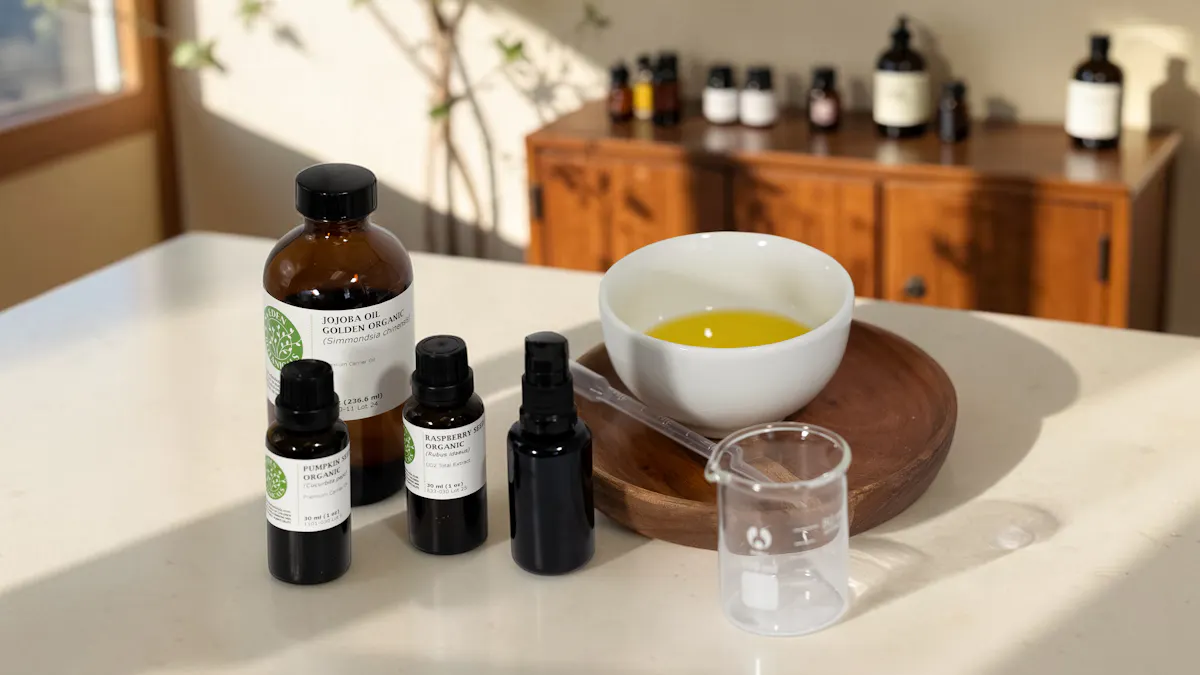
The following formula features a medium-lightweight texture, Jojoba Oil to replenish with its sebum-like lipids, Argan Oil to support the scalp’s moisture barrier, and Pumpkin and Cacay Seed Oils to provide smoothing and extra nourishment. Optional essential oils balance and improve moisture retention and provide a soft, clean, herbal-floral aroma.
Moisturizing Scalp Oil for Dry Scalp and Hair
Ingredients and Supplies:
10 ml Jojoba Oil, Golden - Organic
5 ml Pumpkin Seed Oil – Organic
4 Large Measuring Stem Pipettes
Optional 1% Essential Oils
(reduce by half if you have sensitive skin or omit them entirely):
4 drops Lavender, Bulgaria - Organic
2 drops Clary Sage - Conventional
Directions:
Set the 1 oz. bottle on a paper towel to absorb any spills. Use the large measuring stem pipettes to add each carrier oil (Jojoba, Argan, Pumpkin, and Cacay Oils) to the bottle. Then, if using essential oils, use the fine pipettes to add each essential oil (Lavender, Palmarosa, Clary Sage). Twist on the pump top and gently shake to combine.
How to Use Your Moisturizing Scalp Oil
· Apply 1-2 times per week before shampooing.
· Part dry hair in sections and add 1-2 drops along the part line. Take caution to avoid the eye area.
· Massage the scalp for several minutes to encourage your scalp’s natural oil production.
· Leave on for least 30 minutes and up to two hours (or cover hair in a shower cap and leave on overnight).
· Follow with washing hair with a mild, hydrating shampoo (a double wash may be necessary).
· If desired, apply a few drops of your Moisturizing Scalp Oil immediately after washing to lock in moisture. These oils also fortify the hair’s cuticle and support softness, elasticity, and shine.
Tips:
· Wash hair with warm water rather than hot and avoid high-heat styling (both can make dryness worse).
· Gently brush hair 1-2 times a week to help distribute your scalp’s own natural oils through your hair.
· Your Moisturizing Scalp Oil can also be used as a conditioning hair oil to add shine, moisturize, and reduce frizz. After shampooing, massage a few drops into the ends of damp hair and style as usual.
Formulating for dry scalp is about replenishing lost lipids with the right combination of nourishing botanical oils. You might like to try a few different carrier oils and essential oils until you dial in the exact formula that feels and smells as wonderful as it performs. Experiment, adjust, and make it your own – and have fun!
Notes of Caution: We recommend performing a patch test when working with any of our ingredients topically. Please check the Safety Considerations on the product pages for every oil and always check with your physician before using essential oils if you are pregnant, on medication, or have a serious medical condition.