2024-08-30
Let's Talk Soap
Written By: Mollie Jensen
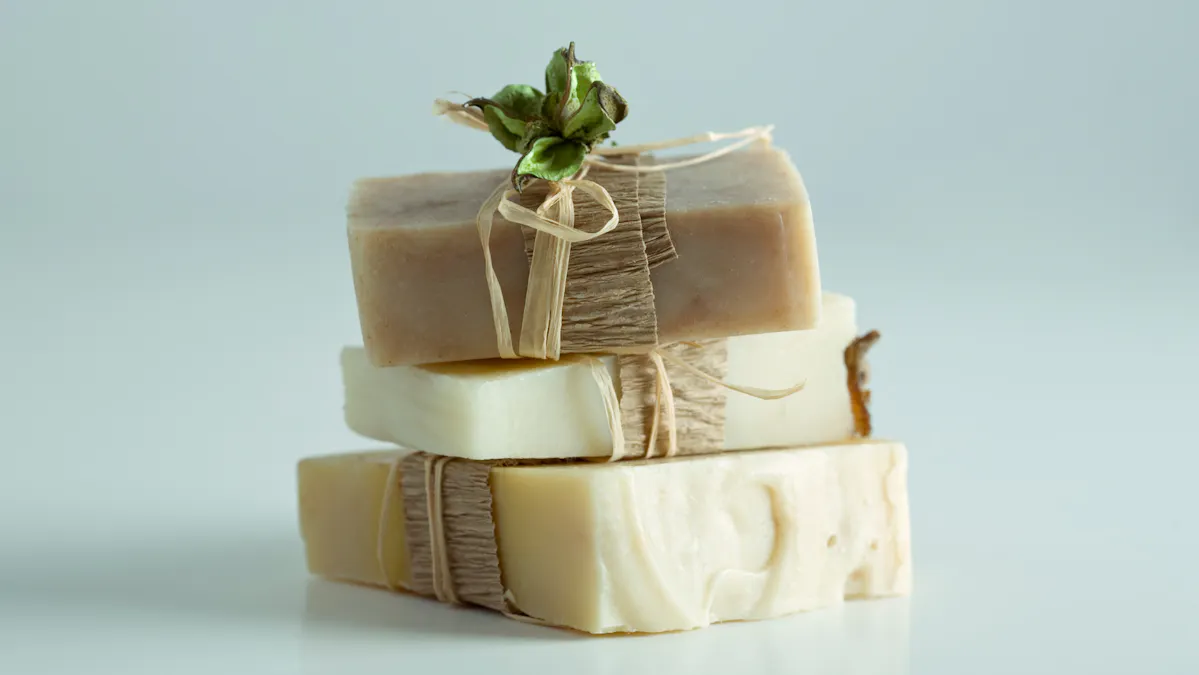
Oftentimes we get asked which of our essential oils, extracts and carrier oils can be used in soapmaking. The short answer is, most of them, but results will definitely vary depending on what you choose.
In this article we’re going to delve into why choosing the right carrier oils for your desired outcome is important, as well as how to get the level of scent you want without it falling flat. But first, let’s talk soap, specifically types of soap processes. This quick, in-a-nutshell overview of each will give you an idea of what process might work best for you.
· Cold Process: This is the most traditional method and relies on the chemical reaction between fat and oil and an alkali (often sodium hydroxide, aka lye) to saponify the fatty components. The only heating is done to melt any solid fats. The process itself is relatively quick, though the curing time is about 4 to 6 weeks. The outcome with this process is a smooth bar that takes colorants well, though if scenting with essential oils some of the aroma may be lost during the saponification process.
· Hot Process: This process also relies on the chemical reaction between the fat and oil with an alkali, but the difference between this and cold process is that the fatty and alkaline components are heated beyond any melting point. This speeds up the curing time to about 24 hours. The results you get with this process is a more rustic, chunkier-looking soap, though since the essential oils are added after saponification, it retains scent much better than cold process.
· Melt and Pour: This process is pretty much as it sounds, you melt readymade soap and then add your own colors, herbs, essential oils and whatnot to the pot and then pour into molds. This is a great way to make soap with kids as there is no caustic lye used and it has the same curing time as the hot process. Almost instant gratification!
What is SAP or saponification and why does it matter?
Saponification is the process that converts fat or carrier oil into soap by combining it with an alkaline substance such as lye (sodium hydroxide/NaOH). The SAP (saponification) value is the number associated with the oil that gives you the amount of lye needed to fully saponify an oil. If you really want to nerd out on the science behind the saponification process, check The Soapmaker’s Companion, by Susan Miller Cavitch and skip to page 227. She gives a fantastic in-depth overview of the chemistry involved in easy-to-understand language.
While calculating the SAP value of an oil can help you determine the amount of lye to use in your recipe, a convenient and faster way is to use one of the many online lye calculators. An easy to use and free version can be found at LyeCalc.com. They offer both a lye calculator for beginners and one for more advanced soapmakers.
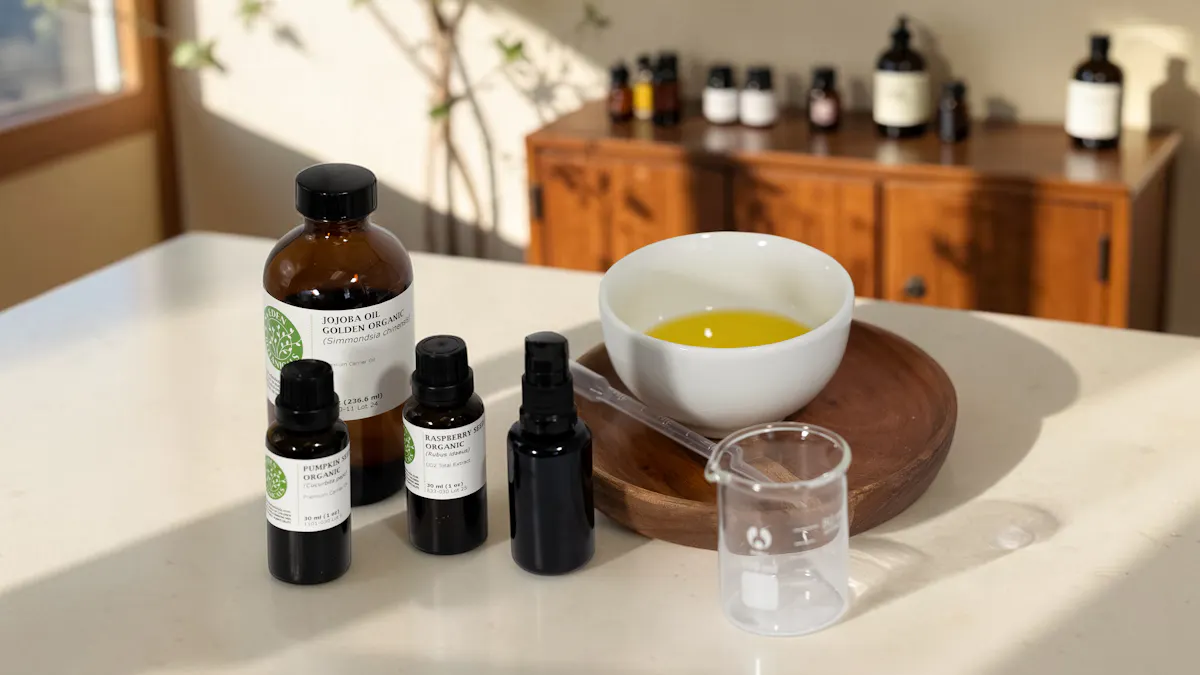
To get started, you’ll want to consider is what type of soap you’d like to create, and then tailor your carrier oils accordingly. Below are a few of the oils we offer that will make a richly moisturizing soap.
· Cranberry Seed Oil – Organic
· Pomegranate Seed CO2 – Organic
· Raspberry Seed CO2 – Organic
Something to note, moisturizing oils will create a creamier, softer, lightly foaming bar so if you want to make them firmer, bubblier and longer-lasting, add a fatty acid emulsifier, like stearic acid. Also of note, refined coconut oil is often suggested to create a harder, more cleansing bar, though our Fractionated Coconut Oil – Organic (FCO) does not have the same properties since the process that makes it a light, non-greasy oil removes the solid components that are beneficial in making firmer, foamier soap. FCO has many other fantastic attributes for use in massage oils, facial and body scrubs, and as a base for natural perfumes. In addition, adding a little Jojoba Oil, Golden – Organic will help stabilize the soap lathering properties with one caveat: Jojoba Oil isn’t actually an oil, but instead, a liquid wax, so it doesn’t fully saponify. Because of this only use up to about 10% as more than that may kill the foam.
Now what about fragrance?
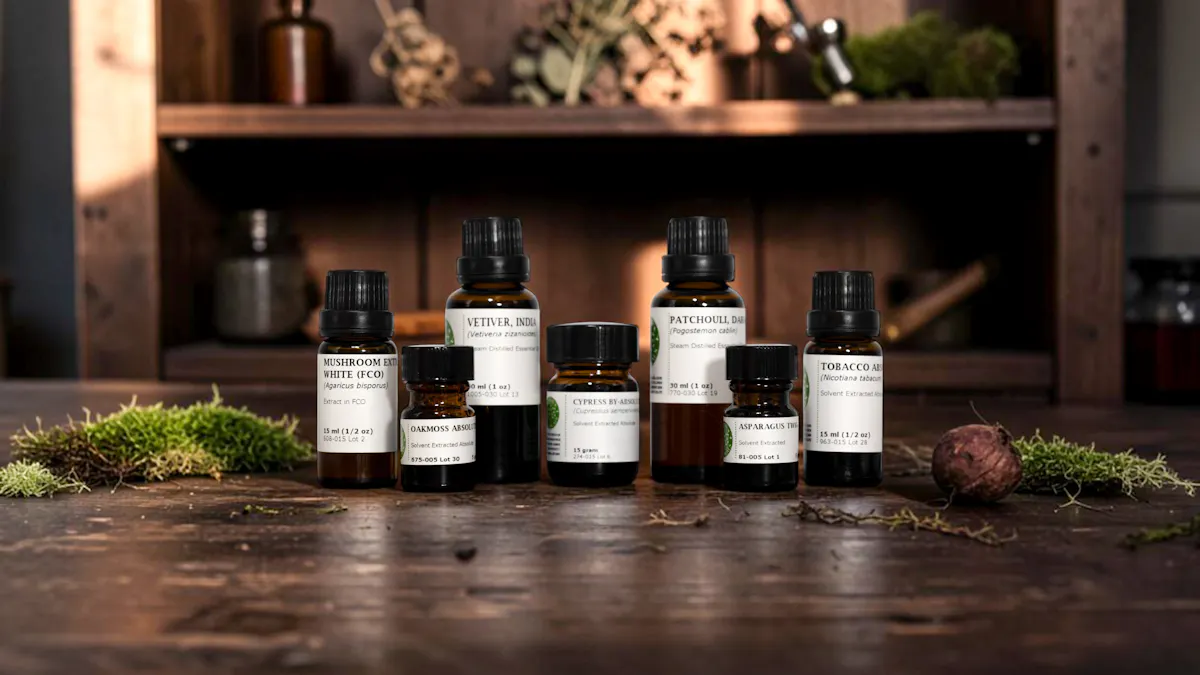
You can choose from a wide variety of Essential Oils, Absolutes and CO2 Extracts to fragrance your soap. As mentioned previously, essential oils may seem to disappear if using the cold process method, though if you want a soap scent that sticks around a while consider hot process or melt and pour. Nevertheless, whichever process you decide to use, blend with a combination of top, middle and base notes to increase aroma longevity. A basic guide for how much to use is somewhere around 3% of the total carrier oils, not the overall formula as the water portion that dissolves the lye will eventually evaporate out. Here are some good examples to use for scent and in no way is this list exhaustive:
Top notes
· Bergamot FCF: Bright and balanced blend of citrus and green aromas and a light floral note.
· Eucalyptus, Blue Gum: Powerful, refreshing, cineolic, with green, camphoraceous notes.
· Lime, Distilled - Organic: Soft, zesty, slightly fruity aroma that is more tart than sweet.
· Litsea Cubeba - Organic: Fresh, sweet-green, lemon-like with light woody-floral undertones.
· Orange, Sweet - Organic: Delicately sweet and tangy with the aroma of fresh cut oranges.
Middle notes
· Geranium, Rose: Sweet, green, leafy-rose-like aroma with a fruity/minty undertone.
· Ginger - Organic: Warm, fresh, somewhat pungent, with a sweet, spicy-woody undertone.
· Lavender, Bulgaria - Organic: Floral, sweet-herbaceous, and rich; full-bodied and smooth.
· Rosemary ct Cineole: Strong, fresh, woody-herbaceous aroma with a minty-green back note.
· Ylang Ylang III - Organic: Intensely sweet, floral, and mildly spicy.
Base notes
· Balsam of Peru: Deep vanilla-sweet aroma, with soft clove-like and mild woody, smoky notes.
· Cedarwood Atlas, Wild: Very rich, sweet, woody, warm and balsamic.
· Nagarmotha (Cypriol): Rich, persistent, woody, earthy, deep, with smoky notes of leather.
· Patchouli, Dark: Extremely rich, deep, earthy, sweet-herbaceous, with fixative qualities.
· Siam Wood: Warm, woody-balsamic, cedar-like aroma; back note reminiscent of rosewood.
A few things to consider…
Eugenol in some essential oils can cause soap to seize.
If you are soapmaking via cold process, there are oils that you’ll either want to avoid or use in very small quantities due to their eugenol content which can make your soap suddenly seize in the middle of processing. Seizing means that your soap can suddenly thicken and become solid before you have a chance to pour it into molds. The best course of action is to review the COA (Certificate of Analysis) of any oil to see if eugenol is present prior to using it. The COAs for each of our oils can be found on its product profile page. For example, oils like Clove and Cinnamon Leaf have high levels of eugenol, though Cinnamon Bark has considerably less.*
Pay attention to the weather.
Believe it or not, the weather can have an effect on your soap. I remember once creating a batch while it was raining heavily outside (and continued to pour for a few days after). The result was “sweaty” soap that didn’t want to cure. The good news is that it eventually did, but the curing process definitely took a bit longer. If you live in a damper area one thing you can do is use a dehumidifier in the room where your soap is curing. That will help keep it from becoming a sticky mess.
Enjoy your failures!
Once you feel like you have the basics down, that might be the time to try experimenting with different types of carrier oils, essential oils, and other ingredients. Have fun, but know that you may not always get the result you were expecting. You never know, however, which mistake might turn out to be an unexpected success.
Lastly, there are so many great resources and forums out there to help guide you in your quest to craft your soaps. A good place to start is Soapmaking Forum, which is free, and Soapy Friends, which offers both free resources as well as soapmaking classes. Enjoy your bubbly!
*Tisserand, Robert and Rodney Young. Essential Oil Safety, 2nd ed., 2014, p. 557.