6 min read
2026-11-06
SDS vs TDS: Similar in Name, But Not in Content
Written By: Mollie Jensen
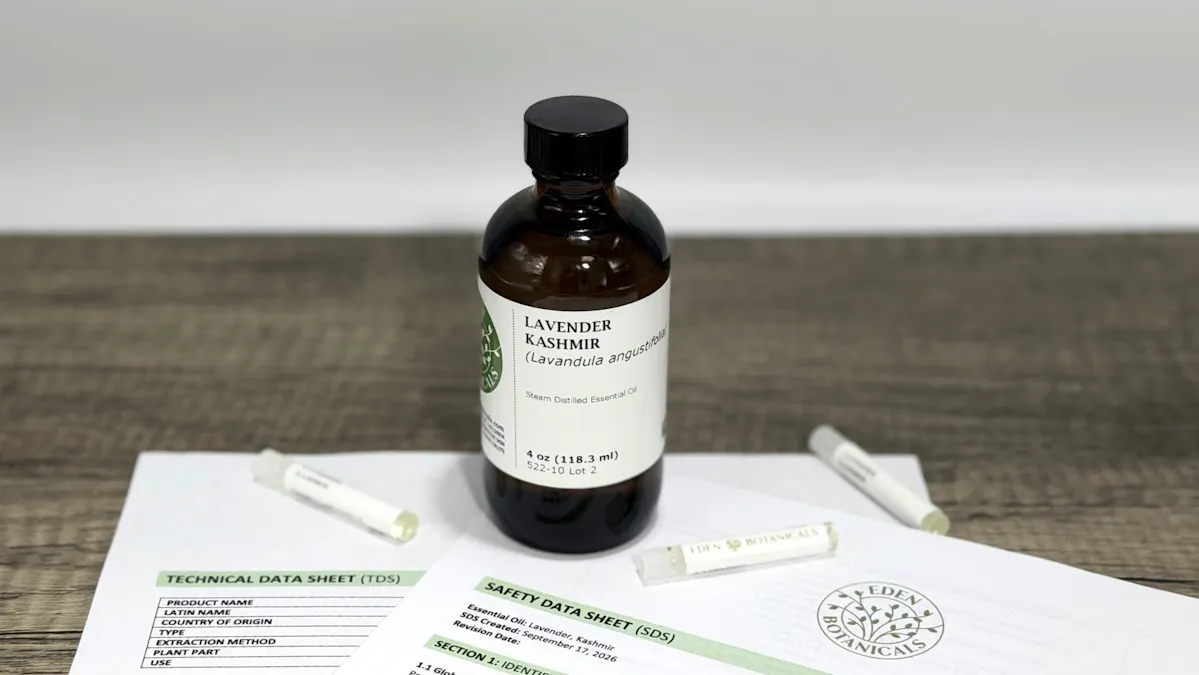
With each of our oils you may have noticed that we offer several documents that are downloadable from the product page. Each of these have their own purpose, but we’re going to focus on two with very similar sounding names, the SDS and the TDS. Although the acronyms look alike, the contents and reason for them are quite different. In this article we are going to review each and explain the information they contain and how you can use them.
A Safety Data Sheet (SDS) is a regulated hazard document written for anyone who stores, ships or works with the product. A Technical Data Sheet (TDS), on the other hand, is sometimes referred to as a specification sheet or product spec sheet and is written for formulators and buyers who need to know the oil's identity, origin and physical properties.
What is a Technical Data Sheet (TDS)?
So as not to overwhelm, let’s start with the shorter of the two, a TDS, which describes what an oil is and the quality standards it meets. No law dictates its content so you will see variations depending on the supplier you work with.
In our TDS you’ll find:
· Identity — our product name/SKU number, botanical (Latin) name, CAS number and INCI name
· Origin — country of origin and the plant part used (flower, leaf, peel, bark, root, etc.)
· Extraction method — steam distillation, cold pressed, CO₂ extraction or solvent extraction
· Suggested applications — i.e., perfumery, aromatherapy, soap, candles or cosmetics
· Organoleptic properties — physical appearance, color and odor profile
· Physical constants — specific gravity, refractive index and optical rotation, if applicable
· Flash point – the temperature at which the oil may become combustible
· Primary constituents — the key constituents and their expected percentage ranges, usually from GC/MS testing
· Storage and shelf-life — recommended conditions and expected stability
· Common allergens – a statement that covers most of the usual allergens such as milk, tree nuts, etc. (if you need a more detailed allergen overview, see the EU Allergens document)
Think of the TDS as a quick brief overview that helps you quickly get acquainted with the product. Next up, the colossal SDS.
What an SDS Covers
An SDS is a legally required document that describes an oil's hazards and how to protect anyone who comes in contact with it while handing it. In the United States the SDS is governed by OSHA's Hazard Communication Standard (29 CFR 1910.1200), which follows the UN's Globally Harmonized System (GHS). Manufacturers, importers and distributors must provide one with the first shipment of a hazardous product, and employers must keep it accessible to workers. Keep in mind that the document is mostly covering safety when working with larger quantities, though there is useful information even for those handling smaller bottles.
These are the common hazards included in the document:
· Flammability — many oils, especially citrus and needle oils rich in limonene or pinene, are considered flammable liquids.
· Skin sensitization and irritation — constituents such as linalool, citral, eugenol and cinnamaldehyde can cause allergic reactions in high concentrations.
· Aspiration hazard — oils high in hydrocarbons can cause serious lung damage if swallowed or inhaled over prolonged periods of time.
· Environmental toxicity — many oils can be harmful to aquatic life, which affects disposal and how to respond to spills.
Diving into the details, the good news is that every SDS follows the same format, so although there is a lot packed into the document, you can easily find what you need if you know where the information is located. Here is a brief description of each of the 16 sections:
· Section 1: Identification of the product and company – identifying factors of the product along with full company contact information
· Section 2: Hazard(s) identification – potential skin and lung irritation, any flammability concerns or effect on aquatic life; precautionary statements and pictograms
· Section 3: Composition / information on ingredients – common chemical name, CAS#, any EU allergens and quantity range
· Section 4: First-aid measures – steps to take if there is accidental skin or eye contact, inhalation or ingestion
· Section 5: Fire-fighting measures – the flash point of the oil and ways to extinguish if it catches flame
· Section 6: Accidental release measures – precautions for personal and environmental safety and clean up in case of accidental spill
· Section 7: Handling and storage – how to safely handle the oil along with best conditions for storage
· Section 8: Exposure control / personal protection – control parameters established by OSHA, etc., if applicable; personal and environmental protection measures
· Section 9: Physical and chemical properties – organoleptic, miscibility, and solubility properties; boiling point and flash point
· Section 10: Stability and reactivity – possible hazardous reactions, incompatible materials and conditions to avoid, if applicable
· Section 11: Toxicological information – possible ways this oil can be toxic via application, ingestion or inhalation
· Section 12: Ecological information – potential environmental impact
· Section 13: Disposal considerations – proper ways to dispose of oil and contaminated packaging
· Section 14: Transport information – regulatory compliance in safely transporting the material
· Section 15: Regulatory information – legislative regulations governing the substance in various countries
· Section 16: Other information – revision date and disclaimer
Don’t let the information in the SDS scare you, much of what is contained pertains to manufacturers dealing with large quantities. BUT even if you are creating your next masterpiece from tiny bottles, it is valuable to know what to do if you happen to get a little in your eye or how to properly dispose of a blend gone wrong.
Which One do You Need?
The easiest way to remember the difference: the TDS tells you what the oil is, and the SDS tells you how to handle it safely. Reach for the TDS when you’re choosing an oil, checking its specs, or confirming it fits your formula. Reach for the SDS when you’re storing, shipping or cleaning up. You can find both on each product page under the “Documentation” tab, and if you have any questions, our team is always happy to help!