5 min read
2026-07-02
Heating Thick Aromatics? Here’s How to Protect Your Labels
Written By: Robin Lander
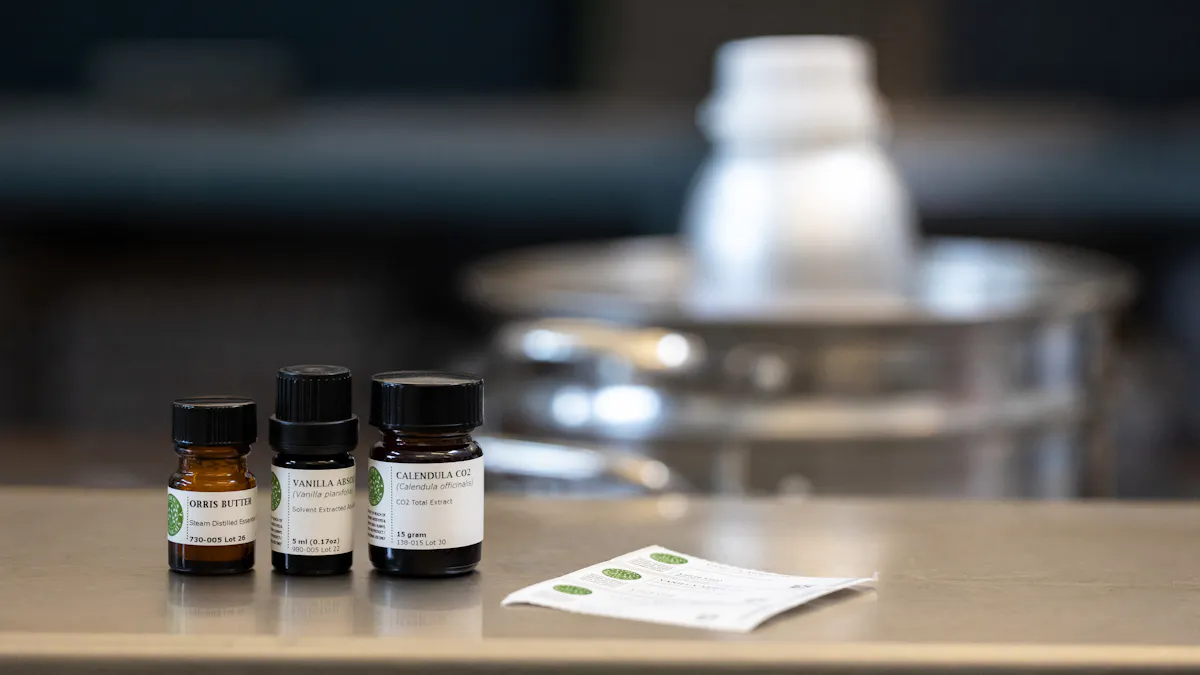
If you’ve been working with aromatics for a while, you’ve probably encountered materials that are thick, highly viscous, or even solid at room temperature. Products such as Vanilla Absolute, Calendula CO2, and Orris Butter (15% irones) require gentle warming before they can be poured or dispensed with a pipette.
However, sometimes this exposure to heat will turn our labels black or render them unreadable. This happens because we use thermal-printed labels which are designed to react to heat. We’ll help you navigate the issue with some tips and tricks to keep your aromatics safe and your labels readable.
Why We Use Thermal Labels
We want our products to be as fresh for you as possible, so our labels are printed as the materials are being bottled. By using thermal-printed labels, we can quickly print on demand multiple times a day with each new product lot.
Thermal labels are coated with a heat-sensitive material. During printing, a heated printhead touches the white label, darkening the paper to create the text and numbers you see on the label.
Please note that thermal labels generally darken or turn black when exposed to temperatures of 150°F or higher. If you happen to heat your bottled materials to 150°F or above, the entire label may darken or become illegible.
Heating Aromatic Materials
The good news is, most aromatic materials will liquefy at a temperature of 120-140°F (49-60°C), and it is best to keep the surrounding heating temperature to no more than 150°F (66°C) if possible.
In fact, our pouring lab has confirmed that most of our viscous or solid materials will liquify with a surrounding temperature 150°F (with the container submerged in a 150°F water bath or surrounded by a heat blanket).
For detailed information about warming materials and heating methods, please see our article Why is My Oil Solid? A Formulator’s Guide to Blending with Viscous Aromatics
For specific warming recommendations for each material, please see the Solubility & Blending Suggestions section of the product page located directly beneath the product photo.
Protecting Your Labels
Because thermal printing relies on heat-sensitive coating rather than ink, repeated touching or oil exposure can gradually wear away the printed information.
One simple trick is to place a strip of clear tape, such as packing or office tape, over the product name as soon as you receive your order. This can help preserve the label from fading due to general handling.
If the product name has already worn away, you can rewrite it on the label with a permanent marker and then cover it with clear tape to protect it. If you should need extra labels, please contact us with your request.
Final Notes for Formulators
For best results in maintaining your product labels and keeping your aromatics safe:
· Protect labels with clear tape as soon as you receive your order.
· Check the Solubility & Blending Suggestions section of the product page for specific warming recommendations.
· If materials need to be heated, warm the materials gently in a water bath.
· Monitor water bath temperature with a thermometer.
· Avoid a water bath or surrounding temperature above 150°F whenever possible, unless otherwise recommended.
· If higher temperatures are necessary, record the product information from the label before warming the bottle.
We hope these simple tips help make working with your aromatics easier. Feel free to reach out if you have questions and we are always happy to help.