image

5 min read

2025-06-15

From Our Farms: South of France

Written By: Mollie Jensen

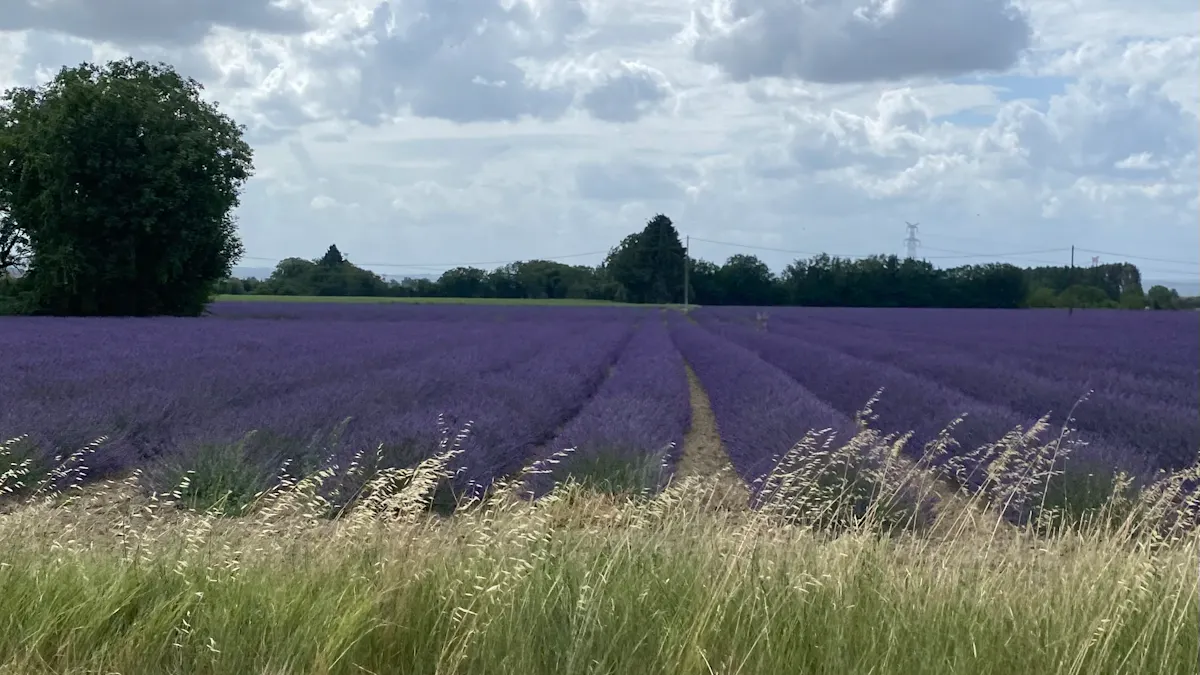
In southern France, the end of June is the perfect time to harvest Lavender flowers for distillation. Standing next to the fields in the region of Provence the exquisite aroma of Lavender permeates the air, delighting the olfactory senses. Provence enjoys a sunny climate and is an area renown for growing the most beautifully fragrant Lavender. It is also the heart of the country’s second-largest production zone for aromatic plants, which ensures harvesting the highest quality flowers.

Our production sites in Provence are located in the cities of Valréas and Pierrelatte, equipped with stills and distillation tanks to produce essential oils, concretes and hydrosols from the lavender and lavandin grown in this region, as well as several other plant species sourced in France and the surrounding areas. This allows for continuous and highly efficient production throughout the year.

Between the two facilities, around 50 T of Lavender flowers and 2-3 T of Lavandin flowers are processed annually. This yields approximately 250 -500 kg of Lavender Oil, and on average, around 35-50 kg of Lavandin Oil per year. When it comes to land use, it takes about 2 ½ acres of crops to harvest 2-4 T of Lavender flowers, which equals between 10-40 kg of oil. For Lavandin, 2 ½ acres yields approximately 6.6 – 10 T of flowers and between 80-50 kg of oil. The reason for the higher yield of Lavandin is the that plants tend to be larger and hardier than the more delicate Lavender plants. In addition, climate factors can come into play which may affect how much oil is produced.

From Field to Distillation

The lavender fields are in close proximity to the distillation sites, which helps increase efficiency during harvest. Viewing the lavender harvest and distillation was an amazing aromatic experience and sight to behold. Here is an overview of the process in Valréas:

The optimal time to harvest lavender is after the flowers have lost about half of their blooms and the color has changed from vibrant purple to a silvery mauve. This is the peak time for oil extraction and when the best quality can be distilled.
image
First, it begins with a tractor driving between the lavender rows, where the harvester cuts the flowers and collects them into the hopper as they go.
image
Once the hopper is full, the plant material is transferred into a large stainless-steel lined container that will transport the lavender flowers to the processing facility.
image
The flowers are then densely packed into the container to fill it to capacity. This ensures that the optimum amount of oil is produced. This same container will be used to begin the steam distillation of the plant material.
image
At the distillation site a special hood awaits, ready to attach to the top of the container once it arrives from the field. This is from where the essential oil vapors will pipe through to the condenser.
image
Once the hood is sealed, steam travels through a tube connected to one of the holes at the bottom of the container. The steam then passes through the packed plant material.
image
Steam carrying the essential oil vapor travels from the container through the heat exchanger and eventually to the condenser. 
image
The condenser is where the cooling process takes place, condensing the steam and essential oil vapors back into liquid. 
image
Cold water and hydrosol are sprayed around the stainless-steel tubes of the condenser, which speed the cooling process.
image
Once the liquid is cooled in the condenser, it runs into a florentine receiver. This is where the essential oil—which is much lighter than water—rises to the top and separates.
image
Lavender and Beyond

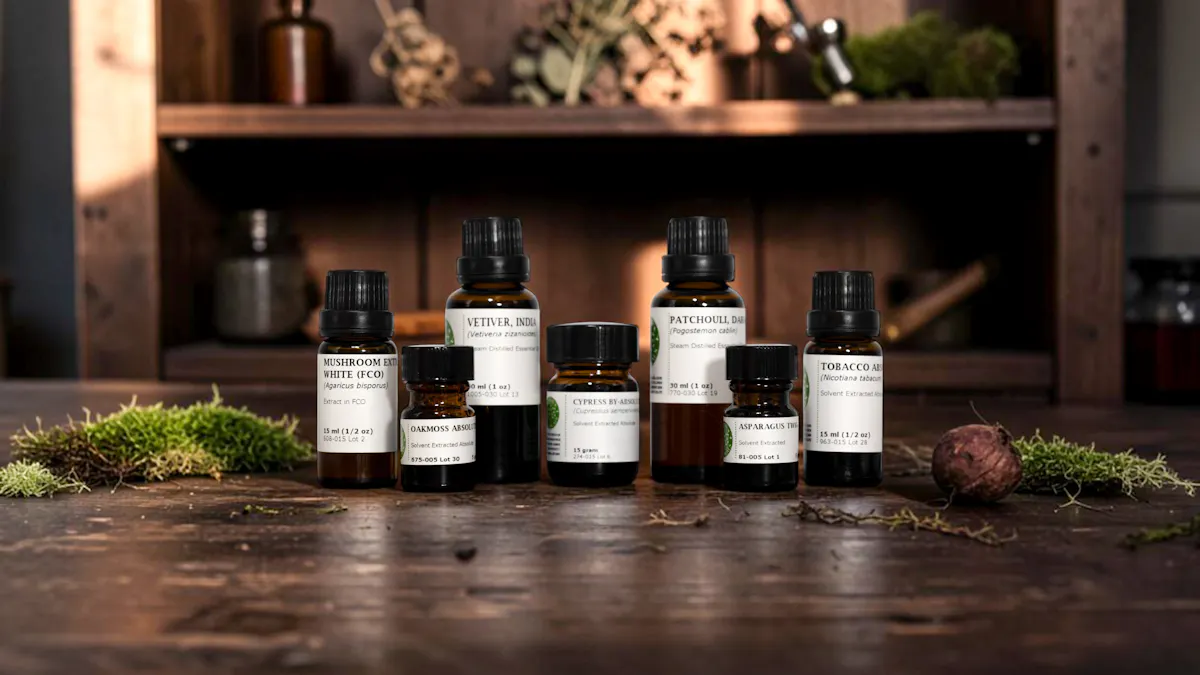
As Provence is known for Lavender and Lavandin, there are many other aromatic plants that grow in the surrounding regions. We offer you several essential oils and absolutes that are produced at our Valréas site along with Lavandin in Pierrelatte, in the beautiful Provence region:

  • Lavender Absolute: The concrete is produced in Valréas from our network of local farmers; then it is sent to our headquarters in Le Sen to process the concrete into absolute.
  • Lavandin, Grosso - Organic:  Grown by our local network of farmers, the Lavandin flowers are processed at both the Valréas and Pierrelatte sites.
  • Black Currant Bud Absolute: The buds are grown in the Burgundy region of France. Harvest occurs in winter, and the buds are delivered fresh to Valréas to produce the concrete, then it is sent to Le Sen to process into absolute.
  • Carrot Absolute: The seeds are sourced from various regions of France. They are first distilled in Valréas and then processed into an absolute at this same location.
  • Clary Sage, Conventional: The flowers and leaves are sourced from various regions of France, and then distilled into essential oil Valréas.
  • Cocoa Absolute Organic: The seeds are sourced from various regions of France. Granulation is first done in Le Sen, then extracted to oleoresin at our Valréas site, then back to Le Sen to process into the absolute.
  • Elemi: The resin comes from an audited supplier in the Philippines, and then is distilled continuously throughout the year into essential oil at our Valréas site.
  • Hay Absolute: The hay is sourced from the Crau region of Camargue, an area known for growing high quality, highly fragrant hay for race horses. It is first extracted into concrete at the Valréas site, and then processed into absolute in Le Sen.
  • Being part of the Biolandes Group has given Eden Botanicals even greater global reach and transparency. As always, we are committed to offering you the highest quality oils and extracts, along with educational resources to expand your knowledge of everything aromatic, and outstanding support through our amazing customer service team. We’re here for you!

    Suggested Reading

    logo

    Himalayan Blue Pine: High-Elevation Invigoration

    Smelling our Pine, Himalayan Blue for the first time might just be as thrilling as a breath of cool, high mountain air. There is something both magical and rejuvenating about the aroma of great coniferous trees, and Pine, Himalayan Blue essential oil is a stunning example.

    logo

    After-Sun Facial Oils: Botanicals to Calm and Nourish

    We wish it wasn’t so, but the truth is well known: Prolonged and cumulative UV exposure can greatly impact our skin’s appearance. Too much time spent unprotected out in the elements can contribute to reduced moisture and elasticity, dark spots, rough texture, and diminished glow.

    logo

    Summer Refresh: Formulating Facial & Body Mists

    Warm skies, summer winds, salt water, and outdoor adventures can boost the mood, but they can also leave our skin feeling hot, tired, and dry. Just like reaching for a cold drink on a warm day, our skin can benefit from a cool, hydrating spritz.