Solubility & Blending Suggestions

  • Dilute and add drop by drop to your blends until the desired effect is achieved.
  • Soluble in fixed (carrier) oils and alcohol.
  • “…finds extensive use in perfumery for citrus colognes, lavender waters, fougères, pine needle fragrances, and Amber perfumes (blends excellently with olibanum [Frankincense] and spice oils!)…”*
  • *Arctander, Steffen. Perfume and Flavor Materials of Natural Origin, 1960, p. 559.

    Suggested Resources

    • The Complete Guide to Aromatherapy, 3rd ed., Vol. I, Salvatore Battaglia, 2018, pp. 504-512.
    • 375 Essential Oils and Hydrosols, Jeanne Rose, 1999, pp. 135, 174.
    • Contemporary French Aromatherapy, Dominique Baudoux, 2020, pp. 396-9.

    Rosemary ct Verbenone - Organic EO

    Salvia rosmarinus (L.) ct verbenone [synonym: Rosmarinus officinalis]

    (11)

    SKU 895-G sizes:

    Sample 1 ml (1/30 oz)
    $3.00
    5 ml (1/6 oz)
    $8.00
    15 ml (1/2 oz)
    $13.75
    30 ml (1 oz)
    $22.50
    59.14 ml (2 oz)
    $37.50
    118.29 ml (4 oz)
    $66.50
    236.58 ml (8 oz)
    $119.00
    473.17 ml (16 oz)
    $215.25
    1 kg (2 1/5 lb)
    $460.25

    Contact us for bulk inquiries.

    Botanical NameSalvia rosmarinus (L.) ct verbenone [synonym: Rosmarinus officinalis]
    Suggested UseAromatherapy, Perfumery, Cosmetics, Soapmaking, Candle Crafting
    INCI NameRosmarinus Officinalis (Rosemary) Leaf Oil
    CAS Number84604-14-8
    OriginVarious
    Extraction MethodSteam Distilled
    CultivationCertified Organic
    Plant Partleaves.
    Notetop, middle.
    Aroma Familycineolic, herbaceous.
    Aroma ProfileIntense, potent balsamic, somewhat camphoraceous aroma with fresh green, peppery high notes; a very finely balanced Rosemary aroma.
    AppearanceColorless, transparent, mobile liquid.
    Shipping Restriction3 – Flammable

    Safety Considerations

    • May be neurotoxic, based on camphor content; a maximum dermal use level of 6.5% is recommended.* Due to the presence of ketones (verbenone), we recommend avoiding use on children less than 10 years old, the elderly, those with epilepsy, during pregnancy and/or nursing, and those with liver or high blood pressure conditions.**
    • Dilute before using. A patch test should be performed before use for those with sensitive skin.
    • Store in a cool, dark place away from heat and light.
    • *Tisserand, Robert and Rodney Young. Essential Oil Safety, 2nd ed., 2014, p. 409.
    • **Price, Shirley and Len Price. Aromatherapy for Health Professionals, 2nd ed., 1999, p. 342.

    Rosemary ct Verbenone - Organic EO

    Salvia rosmarinus (L.) ct verbenone [synonym: Rosmarinus officinalis]

    (11)

    The fresh, balsamic, almost forest-like, cooling and at the same time warmaroma of our organic Rosemary ct Verbenone is, in a word, beautiful! The nuances of its finely balanced aroma can be attributed in part to traces of volatile nitrogen compounds of high odor intensity,

    Size

    Selected size SKU:895-016 - Rosemary ct Verbenone - Organic 15 ml (1/2 oz) (w/ orifice reducer)

    Sample 1 ml (1/30 oz)
    $3.00
    5 ml (1/6 oz)
    $8.00
    with orifice reducer
    15 ml (1/2 oz)
    $13.75
    with orifice reducer
    30 ml (1 oz)
    $22.50
    59.14 ml (2 oz)
    $37.50
    118.29 ml (4 oz)
    $66.50
    236.58 ml (8 oz)
    $119.00
    473.17 ml (16 oz)
    $215.25
    1 kg (2 1/5 lb)
    $460.25
    $3.00
    Details
    Solubility & Blending Suggestions
    Suggested Resources
    Safety Considerations
    Certificates of Analysis (COA)
    Documentation

    Product Overview

    The fresh, balsamic, almost forest-like, cooling and at the same time warm aroma of our organic Rosemary ct Verbenone is, in a word, beautiful! The nuances of its finely balanced aroma can be attributed in part to traces of volatile nitrogen compounds of high odor intensity, occurring in concentrations from less than one part per billion to the parts per million range.[1] A true example of the potency of the kingdom of plants and their essences – no wonder they elicit our grateful respect.

    The designation of chemotypes (ct) of an essential oil is necessary when distinctly different chemical compositions of the same species are produced; due to their different compositions, these oils can be applied to varying purposes. In the aromatherapy market, Rosemary essential oil appears as one of three main chemotypes – cineole, camphor or verbenone – each of which has different applications. Oils listed simply as “Rosemary” are suspect for highly profitable adulteration.

    The most commonly used chemotype is Rosemary cineole, a popular oil for invigorating massage oils, cleansing scalp blends, and for refreshing the senses in diffusers. Rosemary verbenone chemotype is meant for more specialty applications in clarifying skincare formulations and chest rubs.

    Ketones in general and verbenone in particular are known solvents of minute molecular size. This Rosemary is best used sparingly for aromatherapy or applied topically after appropriate dilution.

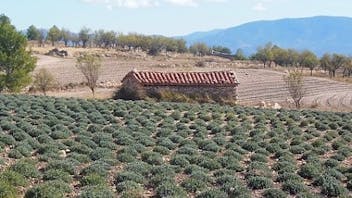
    Rosemary is a well-known herb native to the Mediterranean region, abundantly growing wild in Spain, France, Corsica, Italy, Sardinia, all states of the former Yugoslavia, Russia, Turkey, the Middle East, Libya, Tunisia, Algeria, Morocco, etc.[2] The odor character of Rosemary oil varies according to where the plants grow (altitude and climate), what plant parts are distilled, and whether the plant material is fresh or dried when distilled.[3]  The plant was sacred to the ancient Greeks and Romans who used it as a symbol of regeneration and employed its aromatic qualities in incense.[4]

    1 Boelens, M.H. "Chemical & Sensory Evaluation of Trace Compounds in Naturals," in Proceedings of the 13th International Congress of Flavors, Fragrances and Essential Oils, Istanbul, Turkey, Baser, K.H.C. (ed), 3, 177.

    2 Arctander, Steffen. Perfume and Flavor Materials of Natural Origin, 1960, pp. 557-8.

    3 Poucher, William A. Perfumes, Cosmetics & Soaps, 1930, p. 310.

    4 Aromatherapy for the Family, Jan Kusmirek, ed., 1992, p. 47.
    Product Overview

    The fresh, balsamic, almost forest-like, cooling and at the same time warm aroma of our organic Rosemary ct Verbenone is, in a word, beautiful! The nuances of its finely balanced aroma can be attributed in part to traces of volatile nitrogen compounds of high odor intensity, occurring in concentrations from less than one part per billion to the parts per million range.[1] A true example of the potency of the kingdom of plants and their essences – no wonder they elicit our grateful respect.

    The designation of chemotypes (ct) of an essential oil is necessary when distinctly different chemical compositions of the same species are produced; due to their different compositions, these oils can be applied to varying purposes. In the aromatherapy market, Rosemary essential oil appears as one of three main chemotypes – cineole, camphor or verbenone – each of which has different applications. Oils listed simply as “Rosemary” are suspect for highly profitable adulteration.

    The most commonly used chemotype is Rosemary cineole, a popular oil for invigorating massage oils, cleansing scalp blends, and for refreshing the senses in diffusers. Rosemary verbenone chemotype is meant for more specialty applications in clarifying skincare formulations and chest rubs.

    Ketones in general and verbenone in particular are known solvents of minute molecular size. This Rosemary is best used sparingly for aromatherapy or applied topically after appropriate dilution.

    Rosemary is a well-known herb native to the Mediterranean region, abundantly growing wild in Spain, France, Corsica, Italy, Sardinia, all states of the former Yugoslavia, Russia, Turkey, the Middle East, Libya, Tunisia, Algeria, Morocco, etc.[2] The odor character of Rosemary oil varies according to where the plants grow (altitude and climate), what plant parts are distilled, and whether the plant material is fresh or dried when distilled.[3]  The plant was sacred to the ancient Greeks and Romans who used it as a symbol of regeneration and employed its aromatic qualities in incense.[4]

    1 Boelens, M.H. "Chemical & Sensory Evaluation of Trace Compounds in Naturals," in Proceedings of the 13th International Congress of Flavors, Fragrances and Essential Oils, Istanbul, Turkey, Baser, K.H.C. (ed), 3, 177.

    2 Arctander, Steffen. Perfume and Flavor Materials of Natural Origin, 1960, pp. 557-8.

    3 Poucher, William A. Perfumes, Cosmetics & Soaps, 1930, p. 310.

    4 Aromatherapy for the Family, Jan Kusmirek, ed., 1992, p. 47.
    Blends Well With

    logo

    2017-03-29

    Trip to Spain

    Our week long journey began in Barcelona and took us from the historic region of Catalonia to Valencia, Murcia, Castilla/La Mancha, Andalucía, Estremadura and finally back to the capital city, Madrid -- a drive of nearly 2000 km along the Iberian Peninsula.

    logo

    2016-08-16

    Hyblaean Mountain Journey

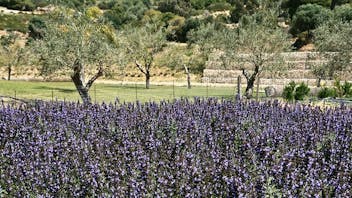
    Sicily, the largest island in the Mediterranean Sea, is an exceptional land that most people love for many reasons: its astonishing beauty, the incredible succession of historical eventst hat have taken place here from the Phoenician age

    logo

    2026-03-27

    Why You Need Mushroom in Your Perfume

    There’s a dirty little secret known to experienced perfumers: the most intriguing fragrances always contain something a little ‘off.’ Historically, formulators used animal-derived aromas like ambergris, civet, and castoreum, now mostly replaced by synthetic versions. But perfumers still rely on the funky facets in botanicals...