
Product image

Solubility & Blending Suggestions

  • Dilute and add drop by drop to your blends until the desired effect is achieved.
  • Soluble in fixed (carrier) oils and alcohol.
  • “Its high concentration of aldehydes gives sparkle to any synergy.”*
  • *Haas, Monika. Quick Reference Guide for 114 Important Essential Oils, 2013, p. 67.

    Suggested Resources

    • L’Aromathérapie Exactement, Pierre Franchomme and Dr. Daniel Pénoël, 1990, p. 347.
    • The Complete Guide to Aromatherapy, 3rd ed., Vol. I, Salvatore Battaglia, 2018, pp. 383-389.
    • Contemporary French Aromatherapy, Dominique Baudoux, 2020, pp. 73, 164-5.

    Lemongrass - Organic EO

    Cymbopogon flexuosus Nees ex Steud.

    (0)
    Sample 3 grams (0.10 oz)
    $3.00

    Contact us for bulk inquiries.

    Botanical NameCymbopogon flexuosus Nees ex Steud.
    Suggested UseAromatherapy, Perfumery, Cosmetics, Soapmaking, Candle Crafting
    INCI NameCymbopogon Flexuosum Oil
    CAS Number8007-02-01
    OriginVarious
    Extraction MethodSteam Distilled
    CultivationCertified Organic
    Plant Partleaves.
    Notetop, middle.
    Aroma Familycitrus, herbaceous.
    Aroma ProfileFresh, strong, lemon-like, grassy-herbaceous aroma with an herbal/oily drydown; very tenacious.
    AppearanceYellow, transparent, mobile liquid.
    Shipping Restriction9 – Misc. Hazard

    Safety Considerations

    • If you have a medical condition or are taking medication, please consult with a physician before use; avoid during pregnancy/breast feeding; skin sensitization – avoid use on hypersensitive or damaged skin, and on children less than 2 years of age; a maximum dermal use level of 0.6% is recommended (IFRA).*
    • Dilute before using. A patch test should be performed before use for those with sensitive skin.
    • Store in a cool, dark place away from heat and light.
    • *Tisserand, Robert and Rodney Young. Essential Oil Safety, 2nd ed., 2014, p. 334.

    Lemongrass - Organic EO

    Cymbopogon flexuosus Nees ex Steud.

    (0)

    Our certified organic Lemongrass essential oil has a fresh, strong, lemon-like, grassy-herbaceous aroma with an herbal/oily drydown. Lemongrass oil is broadly useful in aromatherapy and, beloved for its refreshing and calming lemony scent, is one of the world's best-selling essential oils. Although partial

    Size

    Selected size SKU:550-3 - Lemongrass - Organic Sample (1 ml)

    Sample 3 grams (0.10 oz)
    $ 3.00
    $3.00
    Details
    Solubility & Blending Suggestions
    Suggested Resources
    Safety Considerations
    Certificates of Analysis (COA)
    Documentation

    Product Overview

    Our certified organic Lemongrass essential oil has a fresh, strong, lemon-like, grassy-herbaceous aroma with an herbal/oily drydown. Lemongrass oil is broadly useful in aromatherapy and, beloved for its refreshing and calming lemony scent, is one of the world's best-selling essential oils. Although partial wilting and chopping the lemongrass leaves prior to distillation significantly increases yield, some feel a finer aroma comes from distilling only freshly harvested grass.[1]

    East Indian Lemongrass (Cymbopogon flexuosus), also called Cochin grass or Malabar grass, is native to Cambodia, Vietnam, Laos, India, Sri Lanka, Burma, and Thailand, while West Indian Lemongrass (Cymbopogon citratus) is native to South Asia and Maritime Southeast Asia. While both can be used interchangeably, C. flexuosus has higher solubility in alcohol[2] and is therefore largely used in the perfume industry.  Lemongrass essential oil is the quintessential air freshener, making it a popular addition to diffusers and room sprays, but also finds use in aromatic rubs and massage oils.

    1 Guenther, Ernest. The Essential Oils, Vol. IV, 1950, p. 21.

    2 Ibid.
    image

    Product Overview

    Our certified organic Lemongrass essential oil has a fresh, strong, lemon-like, grassy-herbaceous aroma with an herbal/oily drydown. Lemongrass oil is broadly useful in aromatherapy and, beloved for its refreshing and calming lemony scent, is one of the world's best-selling essential oils. Although partial wilting and chopping the lemongrass leaves prior to distillation significantly increases yield, some feel a finer aroma comes from distilling only freshly harvested grass.[1]

    East Indian Lemongrass (Cymbopogon flexuosus), also called Cochin grass or Malabar grass, is native to Cambodia, Vietnam, Laos, India, Sri Lanka, Burma, and Thailand, while West Indian Lemongrass (Cymbopogon citratus) is native to South Asia and Maritime Southeast Asia. While both can be used interchangeably, C. flexuosus has higher solubility in alcohol[2] and is therefore largely used in the perfume industry.  Lemongrass essential oil is the quintessential air freshener, making it a popular addition to diffusers and room sprays, but also finds use in aromatic rubs and massage oils.

    1 Guenther, Ernest. The Essential Oils, Vol. IV, 1950, p. 21.

    2 Ibid.

    Blends Well With

    logo

    2016-07-22

    Bathroom Spray

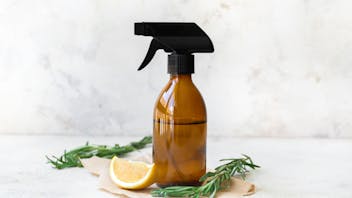
    Here is a DIY aromatic spray to help keep your bathroom -- and every room in your house for that matter -- staying fresh.

    logo

    2026-11-13

    How to Formulate Your Own Essence Blends

    For those of you who loved our handcrafted Essence Blends, we know it was a disappointment when they were discontinued. The reason we stopped formulating them is that, as we continue to grow, we’ve found it increasingly important to focus on what we do best – supply high-quality oils and extracts for your creative endeavors.

    logo

    2026-11-06

    SDS vs TDS: Similar in Name, But Not in Content

    With each of our oils you may have noticed that we offer several documents that are downloadable from the product page. Each of these have their own purpose, but we’re going to focus on two with very similar sounding names, the SDS and the TDS...