6 min read
2024-09-06
Which Vanilla Should I Buy? How to Choose a Vanilla for your Aromatic Creations
Written By: Robin Lander
The sweet and comforting fragrance of Vanilla is one of the most popular and beloved scents on earth. Evoking sensuality, confidence and luxury, the familiar aroma has a miraculous ability to soften the ambiance of almost any environment. Perfumery is no exception, where Vanilla smooths rough edges in a composition, softens strong notes, warms florals, and blends well with virtually any other aroma. Let’s explore this remarkable material and how our various Vanilla offerings capture this enchanting aroma.
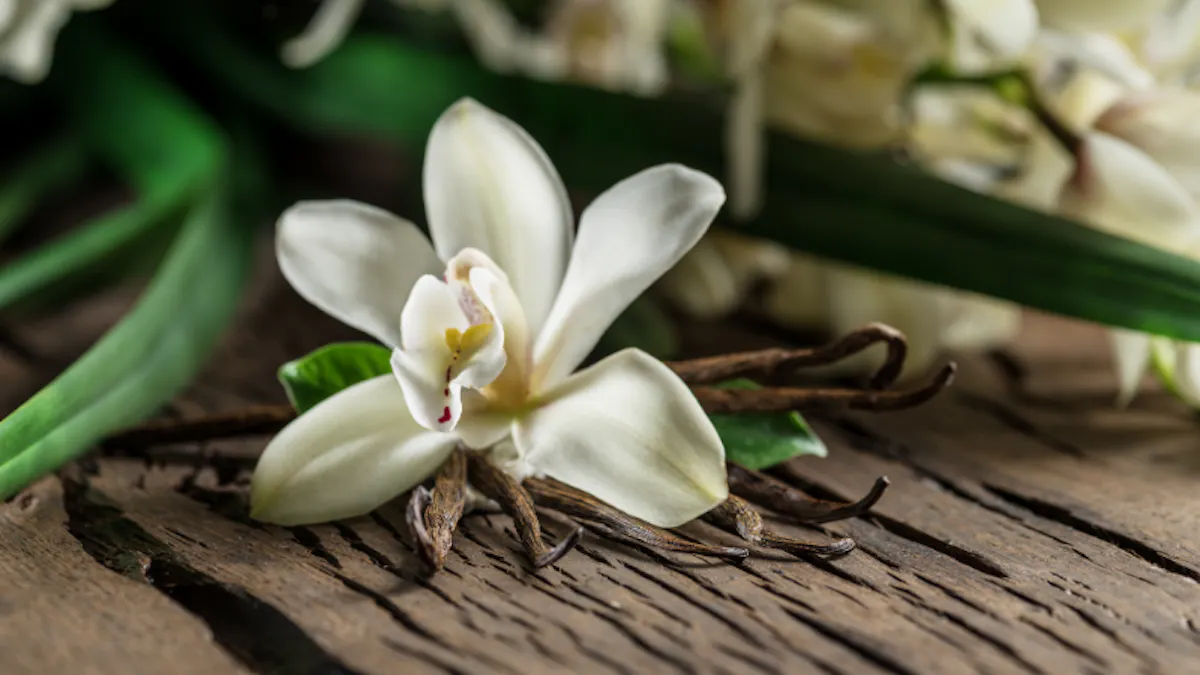
Vanilla is a flowering tropical plant of the orchid family, native to South and Central America and the Caribbean, and is now widely cultivated in Madagascar, India, the South Pacific, and Mexico. A very costly and labor-intensive crop, it takes approximately 4-5 years after planting for Vanilla to set its first blossoms. The flowers are pollenated by hand to ensure they will produce fruit, the Vanilla ‘bean’ pod. After the pods are harvested, they are meticulously cured over a series of months, undergoing an enzymatic process that develops the highly coveted, aromatic vanillin molecule.
Authentic vanillin is the natural component in Vanilla that gives its characteristic aroma. Because of the high cost of Vanilla production, combined with Vanilla’s high demand, a much less costly synthetic vanillin is more commonly used by the fragrance industry. Synthetic vanillin is made in a lab using other aroma chemicals or lignin in wood pulp – however, it’s not easy to match the work of Mother Nature! It’s no wonder true Vanilla extracts are such a precious commodity. We’re proud to say our Vanilla products contain only naturally occurring and authentic vanillin.
Different extractions of Vanilla will yield quite different results in aroma, viscosity, color, solubility, and vanillin content. Being aware of these characteristics will help you choose the right vanilla for your formulations.
Capturing the Deepest Vanilla Aroma with Solvent Extraction
Vanilla Absolute has a rich, sweet, dense and classic Vanilla aroma with a faint bitter undertone, chocolate-like nuances, and a deep balsamic body note. The material is dark brown and molasses-thick, requiring gentle warming to liquify. Soluble in both fixed oils and alcohol, it may contain some particulate matter that can be filtered out if a clear solution is required of your final product. While this Vanilla is organically grown in Madagascar, solvent extraction is not an organic process, and therefore the product is not organic, however it is Fair Trade certified. Vanilla Absolute is ideal for perfumery and has an 8-10% vanillin content.
Vanilla Absolute - Organic has a deep, sweet, warm and rich aroma with luscious hints of caramel and chocolate and deep balsamic undertones. The material is dark brown, varying in viscosity, and may require warming to liquify. Soluble in alcohol, it is only partially soluble in fixed oils and seems to do best in Fractionated Coconut Oil. With other fixed oils, some material may fall out of solution and can be removed, however it will leave its aroma in the fixed oil. This Vanilla is organically grown in Madagascar and is extracted only with organic ethanol, yielding a certified organic material. It takes approximately 5 kilograms of Vanilla bean pods to produce 1 kg of this absolute. Due to the nature of this organic extraction, the vanillin content will vary by lot with a range of 3-15% vanillin content (Check the COA for the current percentage per lot). This material is an excellent choice for perfumery and organic body care formulas.
A Sweeter and Smoother Extract with Carbon Dioxide Extraction
Vanilla CO2 - Organic is sweeter and smoother than the Vanilla Absolutes with a warm, creamy richness and a somewhat woody and animalic aroma with soft notes of spice and tobacco. Extracted with non-toxic carbon dioxide, this CO2 total extract yields a pale-yellow viscous liquid that’s easier to work with and very oil soluble. It is soluble in alcohol, although it may be prone to sedimentation. This material may require gentle heating to liquify and homogenize before blending as it may contain some particulate matter. Certified organic, the Vanilla for this material is typically grown in Uganda, but the origin may vary. It takes approximately 11-14 kilograms of Vanilla bean pods to produce 1 kg of Vanilla CO2! With a whopping 12% vanillin content, a little goes a long way in cosmetics, aromatherapy blends, body care, and perfumery.
Vanilla CO2 - 30% is a blend of 30% Vanilla CO2 in 70% organic Fractionated Coconut Oil, making a product that is more affordable and easier to use. While it is soluble in fixed oils, it is partially soluble in alcohol, which means it may not mix with alcohol completely. This robust dilution is ready to be added to oil-based formulations and perfumes, or to soaps and candles.
Vanilla CO2, Organic - 10% is a blend of 10% organic Vanilla CO2 in 90% organic Fractionated Coconut Oil. Soluble in fixed oils only, this economical material is ready to be added to oil-based perfume or personal care formulations or can be applied directly to skin to wear as a sumptuous perfume.
Choosing the Right Vanilla for your Needs
When choosing a Vanilla, you’ll want to consider the base of your formula – such as oil or alcohol – and be sure to choose a Vanilla that is soluble in that material. Will your packaging show the color of the formulation? If so, you may want to consider the color of the darker Vanilla Absolute or the lighter Vanilla CO2.
If you are looking for a deeper, richer, and more sultry Vanilla, you may prefer a Vanilla Absolute. A sweeter and more dessert-like Vanilla aroma can be achieved with Vanilla CO2.
For perfumery, Vanilla is considered a base note and a fixative, which means it may slow down the evaporation rate of the other materials in the composition, helping the entire fragrance to linger for longer. When using Vanilla in perfumery, we suggest using extremely small amounts in your blends to start with – Vanilla tends to ‘bloom’ (increase in aroma) in formulas and perfumes as they age, with the potential to become predominant.
A popular choice in cosmetic and body care products, Vanilla helps harmonize the fragrance composition, adds warmth and staying power, and depending on what aromas it is combined with, can elevate a formulation to one of either peaceful innocence or decadent extravagance. Vanilla has emollient qualities to help soften the skin and is beautiful in body butters, creams, lotion bars, hair and beard oils, and bath, body, and massage oils.
When it comes to soap and candles, many formulators want a Vanilla that is oil soluble and has a high vanillin content, or perhaps one that is light in color. Here, your best bet may be our Vanilla CO2 - Organic. Some may prefer to blend this material into a vegetal carrier oil first, such as Sunflower Oil - Organic, and then add this blend to their candle wax or soap formula.
No matter which of our Vanilla offerings most appeals to you or best suits your formulation, you’ll surely enjoy the benefits of a long-lasting, uplifting, sensual, soothing and sweet aroma that is a favorite around the world for people of all ages.
Looking for an alternative, versatile Vanilla-like aroma at an economical price? Try our Balsam of Peru Oil.