6 min read
2026-07-10
Which Frankincense is Best for Massage?
Written By: Robin Lander
One of the simplest and most enjoyable ways to experience aromatherapy is through an aromatic massage oil. The practice of applying aromatic oils to the body dates back thousands of years and was embraced by cultures around the world.
Frankincense, with its centuries of trade along the Incense Route from the Mediterranean to Arabia to India, is surely one of the earliest and most beloved aromas for massage and bodily adornment. Long before steam distillation, Frankincense oil was likely prepared by infusing the powdered resin into a vegetal oil or fat.
Today, we have the ease and luxury of adding Frankincense essential oil and CO2 extracts to premium carrier oils for massage, muscle and joint rubs, anointing and body oils, as well as cosmetics and perfume. But with several kinds of Frankincense to choose from, how do you select one for massage?
The truth is that each of our Frankincense offerings brings something unique to a massage blend. Understanding the subtle differences in their constituent profiles and aromas can help you choose the ones best suited to the type of massage experience you want to create.
Let’s explore the characteristics of our Frankincense offerings and the ways to use them for massage.
How Frankincense is Extracted
Frankincense is the resinous sap exuded from trees in the Boswellia genus. As with all trees and plants, the chemistry of the essential oil found in the resin changes depending on the surrounding environment, or ‘terroir.’ Frankincense resin from a Boswellia tree growing in India will naturally vary in constituents and aroma from one grown in Oman.
To harvest Frankincense for extraction, a small incision is made in the bark. The tree sends a milky sap to seal the wound from the elements. This exudate forms resinified droplets, or ‘tears,’ that are collected for extraction.
This resin can be steam distilled to produce Frankincense essential oil, capturing only the lightest, most volatile aromatic molecules. It can also be CO2 extracted, a process that can collect some of the larger molecules that are too heavy to be carried over by steam.
The Constituents that Shape the Massage Experience
As the sap of a tree, it’s not surprising that Frankincense would share some of the same aromatic constituents – monoterpenes such as pinene, limonene, and alpha-thujene – found in other tree oils like Pine, Spruce, Cedar, and Eucalyptus.
Consisting primarily of monoterpene hydrocarbons, these tiny, highly aromatic molecules allow the scent of Frankincense to diffuse easily through the air. This remarkable volatility may explain why ancient peoples valued Frankincense so highly as a potent ceremonial incense and aromatic for the body and spirit.
Let’s look at a few of these important constituents in Frankincense and what they offer in a massage formulation:
· Alpha-pinene: Common in coniferous trees, it lends a refreshing, clarifying, and cleansing aroma. It’s particularly well suited to massage of muscles and joints, especially after a workout or rigorous activity. The aroma is also excellent in chest rubs.
· Alpha-thujene: Also found in Eucalyptus, the green, woody, fresh-herbaceous aroma is helpful in revitalizing massage of overworked muscles and joints.
· Limonene: Most often found in citrus peels and pine needles, it contributes a bright, cheerful aroma that can quickly uplift the spirit. When used in massage, it may have invigorating effects, especially after periods of non-activity, such as upon waking. It is wonderful in belly rubs as well.
· Serratol/Incensol: These larger diterpenes are found primarily in Frankincense CO2 extracts rather than steam distilled oils. Their deeper aromas encourage an atmosphere of comfort and contemplation, making them ideal for calming, meditative, and warming massage.
· Other notable terpenes that help make Frankincense beneficial in massage blends include sabinene, b-myrcene, p-cymene, and b-pinene.
A Note on Boswellic Acids
Despite what you may read online, Boswellic acids are not present in Frankincense essential oils or CO2 extracts. These much larger triterpenoid molecules are left behind during both steam distillation and CO2 extraction. Boswellic acids may be found in solvent extracted Frankincense products or whole resin powders.
Choosing the Right Frankincense for You
While every Frankincense has its own personality, natural variations in constituents and aroma make each one suited for different massage experiences. Let’s take a deeper dive into our six Frankincense offerings and their unique qualities:
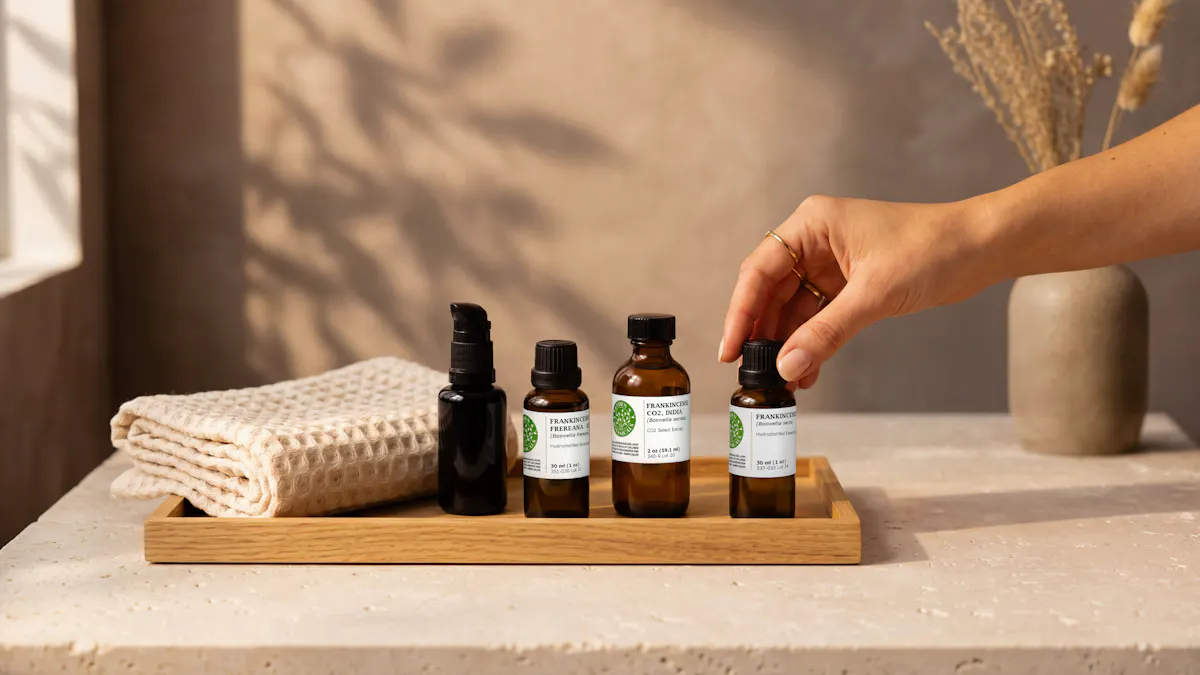
Frankincense Frereana – Organic
· Botanical name: Boswellia frereana
· Aroma: Incredibly fresh, diffusive, pungent pine-like, and full-bodied with deep woody/resinous undertones and subtle citrus and coniferous top notes.
· Typical constituent profile: Alpha-pinene 35-45%, Alpha-thujene 14-27%, Limonene 1-2%.
· Characteristics: Our Frankincense Frereana – Organic has the greatest balance of a-pinene and a-thujene along with a wide range of other terpenes.
· Best suited for: If we had to pick just one Frankincense for general massage, this would be it. Its balanced, well-rounded chemistry makes it a wonderful all-purpose choice for all types of massage oils and body blends.
· Botanical name: Boswellia sacra
· Aroma: Fresh, warm, resinous, coniferous, with peppery undertones and a top note of lemon-orange citrus.
· Typical constituent profile: Alpha-pinene 72-77%, Limonene 2-3%.
· Characteristics: Our Frankincense, Oman has the highest level of a-pinene of all our Frankincense offerings. It also has an exceptionally smooth yet very fresh aroma that perfumers adore.
· Best suited for: Post-workout massage, chest rubs, energizing and morning massage blends.
· Botanical name: Boswellia serrata
· Aroma: Warm resinous, rich musky/earthy body with slightly licorice-like undertones and a ‘lifting’ pine-like top note.
· Typical constituent profile: Alpha-thujene 50%, Serratol/Incensol 16%, Alpha-pinene 5-10%, Limonene 1%.
· Characteristics: CO2 extraction allows for heavier molecules such as Serratol/Incensol to be present in the oil, lending a deeper, more complex aroma. It is also the highest in a-thujene. The wider range of molecules may help support a more meditative experience.
· Best suited for: Calming, meditative massage, an anointing body oil before yoga, workouts, or breath work, warming massage of overworked muscles and joints, and for a sense of revitalizing energy.
· Botanical name: Boswellia carteri
· Aroma: Incredibly smooth, full, warm, and sweet balsamic with clear lemon and pine-like top notes and complex woody, slightly peppery undertones.
· Typical constituent profile: Alpha-pinene 35-47%, Serratol/Incensol 12%, Limonene 3-4%, Alpha-thujene 0.3-1.5%.
· Characteristics: Like our Frankincense CO2, India, Serratol/Incensol are present, along with a generous amount of refreshing a-pinene, and a higher level of limonene that lends lovely citrusy notes.
· Best suited for: Massage for uplifting the spirit, after-meal belly rubs, body/anointing oils before meditation, warming massage of tired or cold muscles and joints, invigorating chest rubs.
Frankincense, Somalia and Frankincense, Somalia – Organic
· Botanical name: Boswellia carteri
· Aroma: Lemon-citrusy top notes over resinous, coniferous, and sweet woody/balsamic undertones.
· Typical constituent profile: Alpha-pinene 40-65%, Limonene 5-18%.
· Characteristics: Generally containing the highest levels of limonene, these Frankincense options are the most lemony in aroma, combined with the beautiful woody-coniferous clarity of a-pinene.
· Best suited for: Uplifting and revitalizing massage of all types, especially deep-tissue massage and joint rubs, as well as body oils to improve the appearance of skin.
How to Dilute Frankincense for Massage
The appropriate adult dilution for whole body massage is 2% essential oils to 98% carrier oils.
This works out to be about 18 total drops essential oils into every one ounce of carrier oil.
If making a blend specifically for joints that will only be applied over small areas of the body, such as the hands or knees, the dilution can be 3-5%, or 25-40 drops total essential oils per ounce of carrier oil. Same for a chest rub or belly rub.
Here’s a massage formula for muscles and joints that’s also calming and uplifting for the spirit. We’ve combined two Frankincense oils to take advantage of their complementary constituent profiles, added Turmeric CO2 for its grounding warmth, Lavender for its comforting aroma, and cheerful Sweet Orange to boost the limonene and brighten the blend.
Revitalizing Frankincense Massage & Body Oil
Materials:
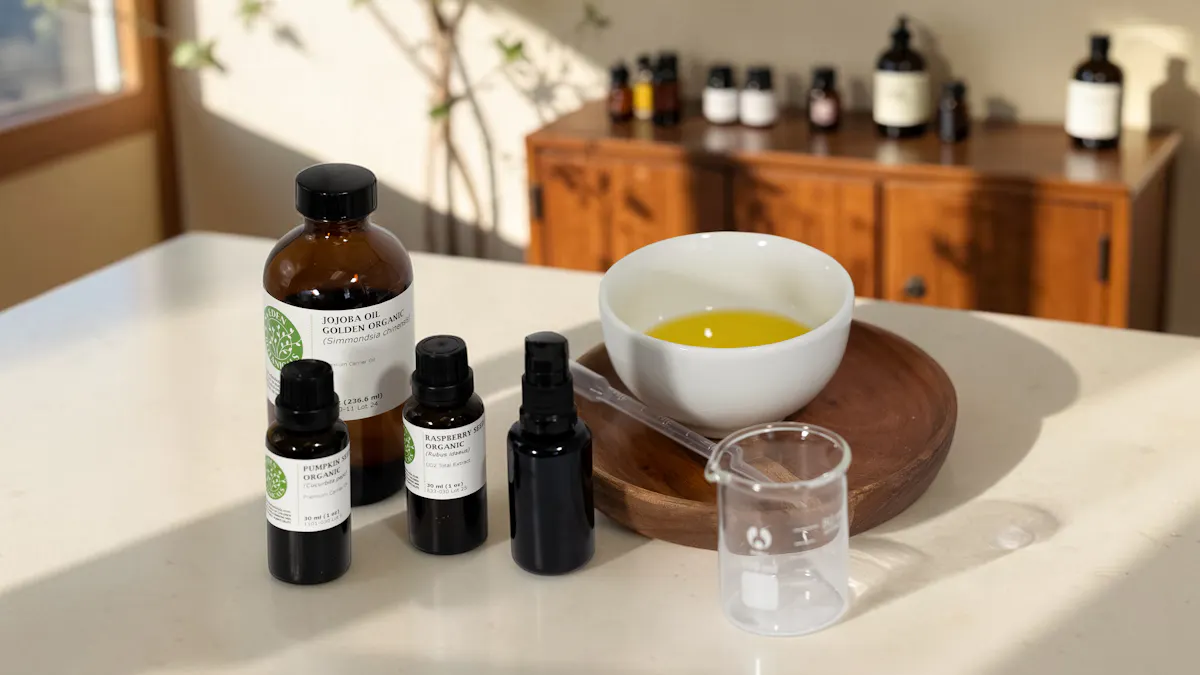
10 ml (2 tsp.) Jojoba Oil, Golden - Organic
20 ml (1 Tbs. plus 1 tsp.) Fractionated Coconut Oil - Organic
6 drops Frankincense CO2, India
2 drops Turmeric CO2 - Organic
2 drops Lavender France - Organic
2 drops Orange, Sweet - Organic
Directions:
Set the 1 oz. bottle on a paper towel to absorb any spills. Add each carrier oil to the bottle, then drop in the essential oils. Twist on the pump top and gently shake to combine.
To Use:
This is a 2% dilution for full body massage. It can also be enjoyed as a morning or post-workout body oil where it is best applied to damp skin after bathing.
For a 4% dilution to be applied over a small area of the body, double the amount of essential oils to bring it to a total of 36 drops essential oils. Pump a small amount of the blend into your hand and gently massage over the desired area twice daily.
Notes of Caution: Avoid the eye area and mucous membranes when applying. Before using any essential oil, please see all Safety Considerations on the left side of the product page. If you have any medical conditions or are on medication, please consult with your physician before using essential oils. A patch test should be performed before use for those with sensitive skin.
Formulating a Frankincense Synergy
A massage or body oil with Frankincense is an exquisite experience that should not be overlooked. While you may have a favorite Frankincense, consider creating a synergy with more than one to craft a well-rounded formula with greater richness and depth.
Frankincense blends well with a wide variety of complementary oils that can support and enhance your creations. Citrus aromas like Orange and Mandarin, conifers such as Pine, Fir, and Spruce, herbaceous Eucalyptus and Lavender, resinous Myrrh, woody Sandalwood and Cedarwood, and earthy Turmeric and Vetiver all pair beautifully with Frankincense, allowing you to shape the overall character and experience of your formulations.