3 min read
2025-07-18
Stay Cool: Tips to Keeping Your Oils Safe When Temperatures Soar
Written By: Robin Lander
It’s the peak of summer, and you’re about to restock your oils or receive an order. Naturally, you might wonder: will the heat affect the quality of my essential oils, carrier oils, or hydrosols?
The good news is that most materials can handle short periods of elevated temperatures during transit without issue. While there are a few best practices to consider, a little knowledge goes a long way. Understanding how heat impacts different types of materials can help you feel confident when ordering, receiving, formulating, and storing your oils in warmer weather.
Essential Oils and Heat
Most essential oils are steam distilled, meaning they’ve already been exposed to high heat during their production. To cause significant damage, essential oils need to be exposed to high, sustained temperatures over several days or weeks. A few days of warm weather in a delivery truck usually isn’t enough to compromise their quality.
However, prolonged exposure to high temperatures, especially over 100°F for extended periods, can accelerate oxidation, evaporation, and changes in color and aroma. The most vulnerable oils are:
The ideal temperature to store essential oils is between 60 - 70°F, away from direct sunlight, and avoiding temperature fluctuations if possible. If you live in a particularly warm environment, you may want to keep your most vulnerable oils under refrigeration.
Understanding Flash Points
Interestingly, it may make a difference whether the essential oil reaches a temperature equivalent to its unique flash point, and if the bottles are opened while the oil is still hot.
Each essential oil has a flash point – the temperature at which its vapors can ignite if exposed to a flame. This means that at the flash point temperature, the lighter aromatic molecules in the oil begin to vaporize rapidly. However, if the bottle is sealed, these vapors will condense back into the oil as it cools.
Pro Tip: Don’t open hot essential oil bottles! Always let them cool to room temperature before unsealing. This keeps those delicate, evaporated compounds from escaping.
Flash points can be found in Section 5 of the product’s Safety Data Sheet (SDS), viewable in the Documents drop-down menu located on the left side of the product page.
Here are some flash point examples:
A Note on Flower Absolutes: Even with higher flash points, the delicate aromatic compounds in flower absolutes like Rose and Jasmine can still break down under prolonged or high heat. Heat causes their larger aromatic molecules to degrade into smaller ones that may not smell favorable.
Caring for Carrier Oils
Carrier oils are more sensitive to heat than essential oils due to their vulnerable fatty acids which can oxidize and become rancid if exposed to heat, air, or light for too long. Ideally, it is best to avoid heat exposure above 100 F (38C) if possible.
However, some carrier oils are more resistant to heat than others. For example, these oils can take a brief bit of heating in stride:
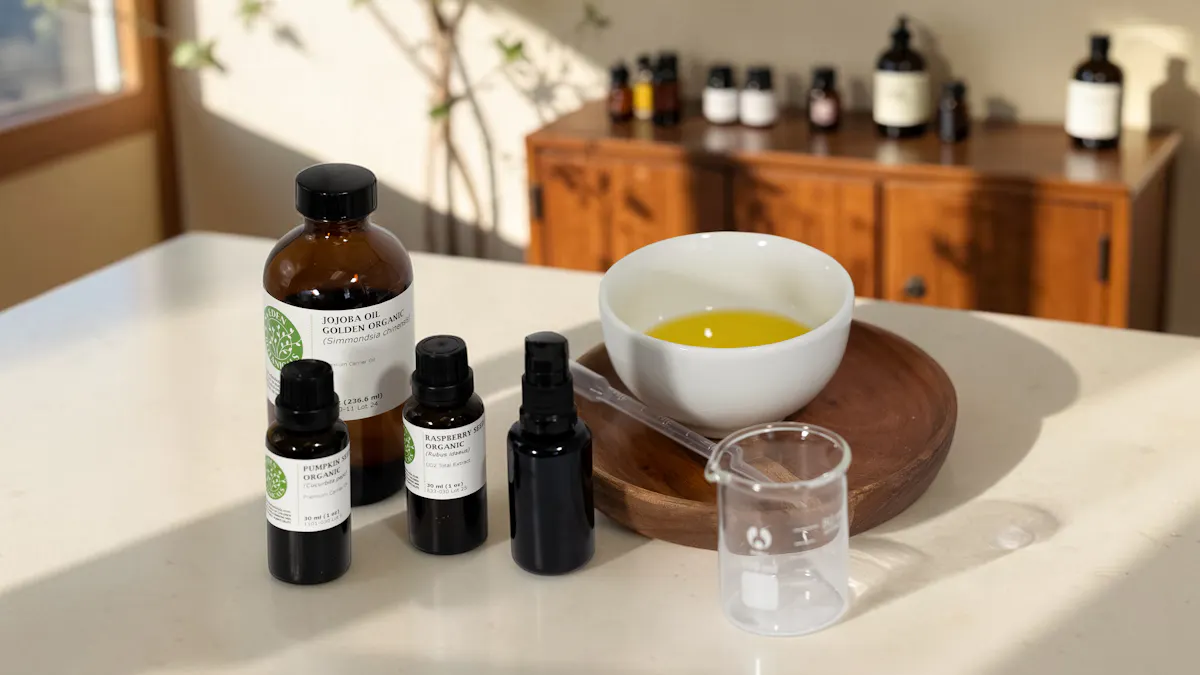
In contrast, oils high in polyunsaturated fats, such as Raspberry Seed CO2 – Organic and Rosehip Seed CO2 – Organic, do not handle heat well. While a few hot days in transit won't usually ruin your carrier oils, storing them in the refrigerator or a cool, dark place after delivery is essential.
Hydrosols: Keep Them Steady
Like essential oils, hydrosols are a product of steam distillation, so they’ve already been exposed to high temperatures. Short periods of heat in transit or production are not a problem.
Where hydrosols are especially vulnerable are rapid temperature changes. These changes can lead to condensation forming inside the bottle which can alter your hydrosol. To help prevent condensation:
Hydrosols can also freeze at temperatures below 32°F, potentially breaking glass bottles as they expand. Although we ship with plenty of insulation (corrugated cardboard and biodegradable packing peanuts), if you must order from us during weather extremes, we suggest either an expedited shipping method or a delay in shipping until normal temperatures resume.
Production Tips for Formulators:
To help reduce heat degradation and evaporation of your oils during the production of cosmetics, candles, and soaps:
When in Doubt: Expedite
The best thing to do if you are worried about heat exposure during transit is to choose an expedited shipping method at checkout or wait until heat extremes have passed.
Remember, most materials can handle short periods of heat without issue, but it’s always wise to avoid opening them while hot, store them properly away from heat and light, and handle delicate oils like citrus, florals, and carrier oils with extra care. With proper handling and a little knowledge, you can feel confident in the stability of your oils and hydrosols, no matter the season.