Product Overview
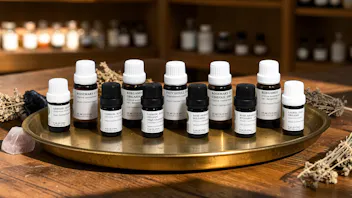
Our very fine Thyme ct Linalool essential oil has a wonderful aroma – distinctive, energetic and quite typical of the live herb. Its aroma is very diffusive, fresh, green, sweet herbaceous, clean, and gentle with a faint peppery undertone and a soft, woody-herbaceous dry down. This essential oil is a must for every home aromatherapy kit!
Chemotypes (ct) are the epitome of remarkable adaptability – these genetic variations occur in plants of identical genus and species when they are grown at different altitudes, in different soils or under different climatic conditions. It has been observed that Thymus vulgaris grown at sea level absorbs more infrared light, producing the ‘hotter’ thymol chemotype, while those plants grown at high altitudes absorb more blue/ultraviolet rays, resulting in the ‘cooler’ linalool chemotype.[1]
In addition to linalool and thymol, Thymus vulgaris also features carvacrol, geraniol, thujanol, cineole and ρ-cymene chemotypes, offering a team of aromatic allies for embracing change. The linalool chemotype of Thymus vulgaris essential oil is safer to use than most other Thyme oils that tend to be high in skin irritant phenolic compounds like thymol and carvacrol. Thus, it is the linalool chemotype that offers its best in topical application; it is preferred for general aromatherapy use, especially for children and the elderly.[2] The spectrum of molecules produced by this singular herb offers a surprising range of beneficial compounds – the reason why Thyme oils are such broadly useful staples in aromatherapy.
1 Rhind, Jennifer Peace. Essential Oils – A Handbook for Aromatherapy Practice, 2012, p. 177.
2 Price, Shirley and Len Price. Aromatherapy for Health Professionals, 2nd ed., 1995/1999, pp. 11-14, 348-9.