Product Overview
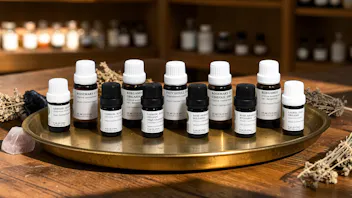
Our luscious and very special Osmanthus Absolute has a soft yet very concentrated aroma, so don't let a whiff straight from the bottle fool you! On a fragrance tester strip, its intense, incredibly rich, sweet, fruity-floral aroma has honeyed apricot and dried fruit nuances with light spicy notes of Black Pepper and faint animalic/leather undertones. There are also soft green and subtle precious wood notes and some slightly waxy characteristics in this complex and delightful oil, all aromatic aspects of which are perfectly balanced from first smell through to its long, luxurious dry down.
The genus Osmanthus is in the same botanical family – Oleaceae – as Jasmine and Lilac[1]; this species, O. fragrans, is an evergreen shrub[2] native to eastern Asia. The yield of Osmanthus absolute is only about one kilo per 1,000 kilos of flowers harvested in September/October,[3] another, older source states three times as many flowers yield one kilo,[4] the difference in weight of flowers required is more than likely due to seasonal changes, time of harvest, etc. – this, plus the expense of labor involved in hand harvesting contributes to the comparably high cost for this precious aromatic oil.
1 Arctander, Steffen. Perfume and Flavor Materials of Natural Origin, 1960, pp. 499-500.
2 Rhind, Jennifer Peace. Essential Oils - A Handbook for Aromatherapy Practice, 2nd ed., 2012, p. 250.
3 Naturals Compendium, International Flavors & Fragrances, 2009, p. 116.
4 Arctander, Steffen. Perfume and Flavor Materials of Natural Origin, 1960, pp. 499-500.
5 Lawless, Alec. Artisan Perfumery or Being Led by the Nose, 2009, p. 74.
6 Tisserand, Robert and Rodney Young. Essential Oil Safety, 2nd ed., 2014, p. 378.