Solubility & Blending Suggestions

  • Dilute well and add drop by drop to your blends until the desired effect is achieved.
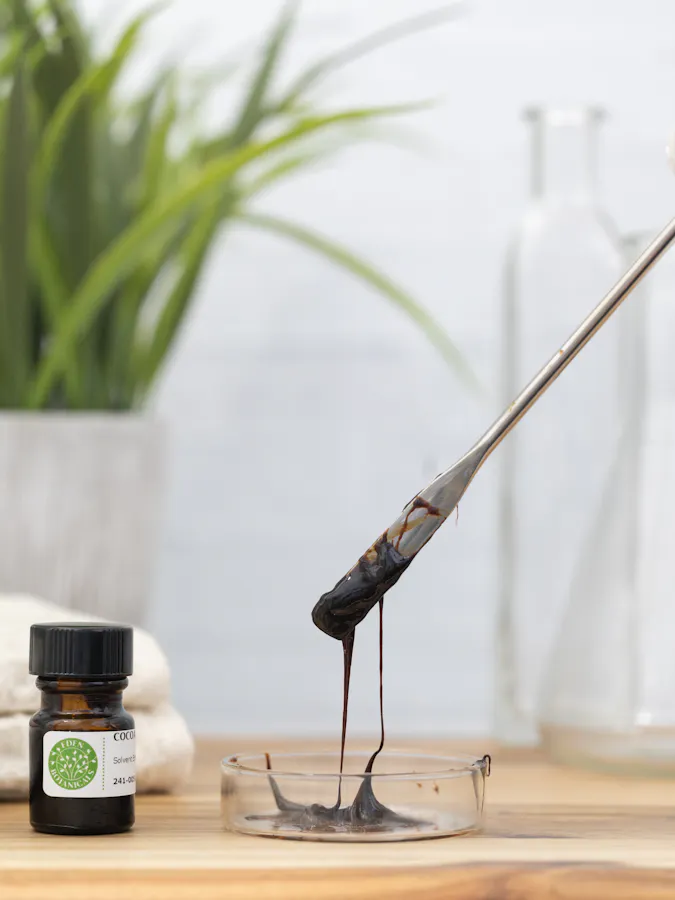
  • This material is a sticky, paste-like mass and will require special use instructions to blend.
  • Soluble in alcohol. Although it is not soluble in fixed (vegetal) oils, it does impart its aroma when the carrier oil/Cocoa Absolute combination is gently heated and shaken. In this case, the absolute will settle to the bottom, leaving a highly scented, clear, light brown oil layer on top.
  • In base accords, trace amounts "can be used to impart exotic effects."*
  • *Lawless, Alec. Artisan Perfumery or Being Led by the Nose, 2009, p. 83.

    Suggested Resources

    Cocoa Absolute - Conventional

    Theobroma cacao L.

    (3)

    SKU 241-G sizes:

    5 grams (3/17 oz)
    $29.75
    15 grams (1/2 oz.)
    $69.75
    50 grams (1 3/4 oz)
    $187.00
    100 grams (3 8/17 oz)
    $333.00
    200 grams (7.055 oz)
    $599.00
    500 grams (17.63 oz)
    $1,315.00
    1 kg (2 1/5 lb)
    $2,411.50

    Contact us for bulk inquiries.

    Botanical NameTheobroma cacao L.
    Suggested UseAromatherapy, Perfumery, Cosmetics, Soapmaking, Candle Crafting
    INCI NameTheobroma Cacao Seed Extract
    CAS Number84649-99-0
    OriginVarious
    Extraction MethodSolvent Extracted
    CultivationConventional
    Plant Partseeds.
    Notemiddle, base, fixatives.
    Aroma Familygourmand.
    Aroma ProfileWarm, very intense aroma of dark unsweetened chocolate, with a faint earthy, bitter chocolate backnote that becomes a rich, sweet cocoa aroma in the drydown; has fixative properties and is very tenacious.
    AppearanceVery dark brown, viscous, opaque, sticky, paste-like mass that is pourable when gently heated.
    Shipping Restriction0 – Non-Hazardous

    Safety Considerations

    • Contains a small amount of caffeine;* if highly sensitive or allergic to caffeine, we recommend avoiding this oil. Not for ingestion.
    • Dilute before using. A patch test should be performed before use for those with sensitive skin.
    • Store in a cool, dark place away from heat and light.
    • *Industry communication.

    Cocoa Absolute - Conventional

    Theobroma cacao L.

    (3)

    We can say without hesitation that our Cocoa Absolute is sure to please chocolate lovers everywhere! Its over-the-top aroma of dark chocolate is like sniffing a cup of triple-strength hot cocoa.

    Size

    Selected size SKU:241-015 - Cocoa Absolute - Conventional 15 grams

    5 grams (3/17 oz)
    $29.75
    15 grams (1/2 oz.)
    $69.75
    50 grams (1 3/4 oz)
    $187.00
    100 grams (3 8/17 oz)
    $333.00
    200 grams (7.055 oz)
    $599.00
    500 grams (17.63 oz)
    $1,315.00
    1 kg (2 1/5 lb)
    $2,411.50
    Out of stock
    $29.75
    Details
    Solubility & Blending Suggestions
    Suggested Resources
    Safety Considerations
    Certificates of Analysis (COA)
    Documentation

    Product Overview

    We can say without hesitation that our Cocoa Absolute is sure to please chocolate lovers everywhere! Its over-the-top aroma of dark chocolate is like sniffing a cup of triple-strength hot cocoa. Who could – or would want to – resist? Cocoa Absolute seems ideally suited for environmental fragrance as well as scenting decadent soaps and candles – and for those who just can’t get enough of that delicious smell! Natural perfumers, please note: the aroma lasts for days on a fragrance tester strip. Naturally derived ethanol is the only solvent used for extraction (no hexane).

    The history of cocoa is fraught with conflict. By means of ruthless and unconscionable acts on indigenous populations, the 15th century Spanish explorer, Christopher Columbus, brought (among many other looted goods) cocoa beans from Central America to Europe where it eventually became highly popular.[1] But chemical analysis of residues found in pottery vessels from Puerto Escondido – what is now Honduras – confirms the usage of cocoa to before 1,000 BCE![2] For centuries the Maya of the Americas have revered cocoa for its considerable properties and have used it in ceremonial and sacred practices. In 1753, the naturalist Linnaeus appropriately dubbed the cocoa tree its botanical name Theobroma cacao – Food of the Gods.

    The beans' distinctive aroma is enhanced by roasting, which is the first process carried out in the production of cocoa aromatics. The roasted beans are then pressed to separate the cocoa butter from the powder, which is the aromatic, defatted part used in extraction. Interestingly, there are over 600 volatile aromatic compounds that comprise the heavenly aroma of chocolate. When using Cocoa Absolute, it is impossible to forget the early origins of this universally beloved aroma – one that is deeply rooted in our psyches from one of the most body/soul-nourishing plants on earth.

    PLEASE NOTE: Cocoa Absolute contains a small amount of caffeine[3], if highly sensitive or allergic to caffeine, we recommend avoiding this oil. Soluble in alcohol, partially soluble in fixed (vegetal) oils; please see Blending Suggestions.

    Naturally derived ethanol is the only solvent used for extraction (no hexane).
    1 Rhind, Jennifer Peace. Fragrance and Wellbeing, 2014, pp. 184-6.

    2 http://www.pnas.org/content/104/48/18937

    3 Industry communication.

    Product Overview

    We can say without hesitation that our Cocoa Absolute is sure to please chocolate lovers everywhere! Its over-the-top aroma of dark chocolate is like sniffing a cup of triple-strength hot cocoa. Who could – or would want to – resist? Cocoa Absolute seems ideally suited for environmental fragrance as well as scenting decadent soaps and candles – and for those who just can’t get enough of that delicious smell! Natural perfumers, please note: the aroma lasts for days on a fragrance tester strip. Naturally derived ethanol is the only solvent used for extraction (no hexane).

    The history of cocoa is fraught with conflict. By means of ruthless and unconscionable acts on indigenous populations, the 15th century Spanish explorer, Christopher Columbus, brought (among many other looted goods) cocoa beans from Central America to Europe where it eventually became highly popular.[1] But chemical analysis of residues found in pottery vessels from Puerto Escondido – what is now Honduras – confirms the usage of cocoa to before 1,000 BCE![2] For centuries the Maya of the Americas have revered cocoa for its considerable properties and have used it in ceremonial and sacred practices. In 1753, the naturalist Linnaeus appropriately dubbed the cocoa tree its botanical name Theobroma cacao – Food of the Gods.

    The beans' distinctive aroma is enhanced by roasting, which is the first process carried out in the production of cocoa aromatics. The roasted beans are then pressed to separate the cocoa butter from the powder, which is the aromatic, defatted part used in extraction. Interestingly, there are over 600 volatile aromatic compounds that comprise the heavenly aroma of chocolate. When using Cocoa Absolute, it is impossible to forget the early origins of this universally beloved aroma – one that is deeply rooted in our psyches from one of the most body/soul-nourishing plants on earth.

    PLEASE NOTE: Cocoa Absolute contains a small amount of caffeine[3], if highly sensitive or allergic to caffeine, we recommend avoiding this oil. Soluble in alcohol, partially soluble in fixed (vegetal) oils; please see Blending Suggestions.

    Naturally derived ethanol is the only solvent used for extraction (no hexane).
    1 Rhind, Jennifer Peace. Fragrance and Wellbeing, 2014, pp. 184-6.

    2 http://www.pnas.org/content/104/48/18937

    3 Industry communication.

    Blends Well With

    logo

    2024-06-10

    Cocoa Absolute for Perfume and Body Care Formulations

    It’s no surprise that naturalist Linnaeus gave the cocoa tree its botanical name Theobroma cacao, meaning “Food of the Gods” – for most, the irresistible and comforting aroma is synonymous with bliss...

    logo

    2013-02-08

    Ylang Ylang, Very Fine Indeed

    I sometimes feel like a broken record when asked how to sweeten up a natural perfume blend. My answer about 90% of the time: just a touch of Ylang Ylang.

    logo

    2026-03-27

    Why You Need Mushroom in Your Perfume

    There’s a dirty little secret known to experienced perfumers: the most intriguing fragrances always contain something a little ‘off.’ Historically, formulators used animal-derived aromas like ambergris, civet, and castoreum, now mostly replaced by synthetic versions. But perfumers still rely on the funky facets in botanicals...