Solubility & Blending Suggestions

  • Dilute and add drop by drop to your blends until the desired effect is achieved.
  • Soluble in fixed (carrier) oils and alcohol.
  • "In the classical type of cologne perfumes [Clary Sage essential oil] lends unique tenacity and acts as a very fragrant fixative, particularly in combination with labdanum products…"*
  • *Arctander, Steffen. Perfume and Flavor Materials of Natural Origin, 1960, p. 570.

    Suggested Resources

    • Aromatherapy for Healing the Spirit, Gabriel Mojay, 1996, p. 62.
    • L’Aromathérapie Exactement, Pierre Franchomme and Dr. Daniel Pénoël, 1990, p. 396.
    • Essential Oils – A Handbook for Aromatherapy Practice, Jennifer Peace Rhind, 2012, pp. 174-5, 287.
    • Plants of Love, Christian Rätsch, 1997, p. 71.
    • The Art of Aromatherapy, Robert Tisserand, 1977, p. 212.
    • Artisan Perfumery or Being Led by the Nose, Alec Lawless, 2009, p. 76.
    • Perfume and Flavor Materials of Natural Origin, Steffen Arctander, 1960, pp. 567-8.

    Clary Sage - Organic EO

    Salvia sclarea L.

    (1)

    SKU 233-G sizes:

    Sample 1 ml (1/30 oz)
    $3.00
    5 ml (1/6 oz)
    $11.00
    15 ml (1/2 oz)
    $21.00
    30 ml (1 oz)
    $35.25
    59.14 ml (2 oz)
    $63.75
    118.29 ml (4 oz)
    $112.00
    236.58 ml (8 oz)
    $200.75
    473.17 ml (16 oz)
    $362.00
    1 kg (2 1/5 lb)
    $706.25

    Contact us for bulk inquiries.

    Botanical NameSalvia sclarea L.
    Suggested UseAromatherapy, Perfumery, Cosmetics, Soapmaking, Candle Crafting
    INCI NameSalvia Sclarea (Clary Sage) Oil
    CAS Number8016-63-5
    OriginVarious
    Extraction MethodSteam Distilled
    CultivationCertified Organic
    Plant Partflower, leaves.
    Notemiddle, fixatives.
    Aroma Familyherbaceous.
    Aroma ProfileVery intense, diffusive, fresh, sweet-herbaceous, slightly bitter aroma with tea, soft tobacco and leather-like undertones that becomes more predominant in the drydown; very tenacious.
    AppearanceColorless, transparent, mobile liquid.
    Shipping Restriction0 – Non-Hazardous

    Safety Considerations

    • Avoid during pregnancy.*
    • Dilute before using. A patch test should be performed before use for those with sensitive skin.
    • Store in a cool, dark place away from heat and light.
    • *Davis, Patricia. Aromatherapy – An A-Z, 1988, pp. 81-2.

    Clary Sage - Organic EO

    Salvia sclarea L.

    (1)

    Our exceptional organic Clary Sage essential oil has an intriguing aroma that is very intense, diffusive, fresh, sweet-herbaceous and slightly bitter with tea, soft tobacco and leather-like undertones.

    Size

    Selected size SKU:233-016 - Clary Sage - Organic 15 ml (1/2 oz) (w/ orifice reducer)

    Sample 1 ml (1/30 oz)
    $3.00
    5 ml (1/6 oz)
    $11.00
    with orifice reducer
    15 ml (1/2 oz)
    $21.00
    with orifice reducer
    30 ml (1 oz)
    $35.25
    59.14 ml (2 oz)
    $63.75
    118.29 ml (4 oz)
    $112.00
    236.58 ml (8 oz)
    $200.75
    473.17 ml (16 oz)
    $362.00
    1 kg (2 1/5 lb)
    $706.25
    $3.00
    Details
    Solubility & Blending Suggestions
    Suggested Resources
    Safety Considerations
    Certificates of Analysis (COA)
    Documentation

    Product Overview

    Our exceptional organic Clary Sage essential oil has an intriguing aroma that is very intense, diffusive, fresh, sweet-herbaceous and slightly bitter with tea, soft tobacco and leather-like undertones. The euphoric aroma is said to elevate the spirit, while the oil is considered an indispensable component of the home aromatherapy collection.

    In natural perfumery, Clary Sage is a material that is often used in formulations for plant-based musk-type bases[1], for example, with Ambrette Seed, Angelica, Patchouli, Labdanum, Balsam of Peru, and smaller amounts of other materials. "It is a valuable additive in Eau de Colognes … and makes an excellent fixative."[2]

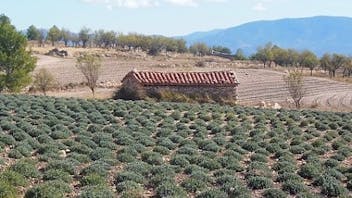
    Salvia sclarea is a perennial native to the Mediterranean region, growing wild in France, Germany, North Africa, parts of Italy, and also on the Crimean Peninsula. It is cultivated in France, Bulgaria, Hungary, Russia, England and the US. The green parts of the plant and especially the flowering tops yield the essential oil containing more than 250 constituents, up to 75 percent of which is linalyl acetate, the ester form of linalool.[3],[4] The abundance of this ester makes Clary Sage a valuable addition to calming baths, diffuser blends, massage oils, chest and belly rubs, beard oils, and scalp and skin preparations.

    1 Groom, Nigel. The Perfume Handbook, 2nd ed., 1997, p. 70.

    2 Ibid.

    3 Rhind, Jennifer Peace. Essential Oils A Handbook for Aromatherapy Practice, 2012, p. 175.

    4 Price, Shirley and Len Price. Aromatherapy for Health Professionals, 2nd ed., 1999, p. 344.
    Product Overview

    Our exceptional organic Clary Sage essential oil has an intriguing aroma that is very intense, diffusive, fresh, sweet-herbaceous and slightly bitter with tea, soft tobacco and leather-like undertones. The euphoric aroma is said to elevate the spirit, while the oil is considered an indispensable component of the home aromatherapy collection.

    In natural perfumery, Clary Sage is a material that is often used in formulations for plant-based musk-type bases[1], for example, with Ambrette Seed, Angelica, Patchouli, Labdanum, Balsam of Peru, and smaller amounts of other materials. "It is a valuable additive in Eau de Colognes … and makes an excellent fixative."[2]

    Salvia sclarea is a perennial native to the Mediterranean region, growing wild in France, Germany, North Africa, parts of Italy, and also on the Crimean Peninsula. It is cultivated in France, Bulgaria, Hungary, Russia, England and the US. The green parts of the plant and especially the flowering tops yield the essential oil containing more than 250 constituents, up to 75 percent of which is linalyl acetate, the ester form of linalool.[3],[4] The abundance of this ester makes Clary Sage a valuable addition to calming baths, diffuser blends, massage oils, chest and belly rubs, beard oils, and scalp and skin preparations.

    1 Groom, Nigel. The Perfume Handbook, 2nd ed., 1997, p. 70.

    2 Ibid.

    3 Rhind, Jennifer Peace. Essential Oils A Handbook for Aromatherapy Practice, 2012, p. 175.

    4 Price, Shirley and Len Price. Aromatherapy for Health Professionals, 2nd ed., 1999, p. 344.

    Blends Well With

    logo

    2017-03-29

    Trip to Spain

    Our week long journey began in Barcelona and took us from the historic region of Catalonia to Valencia, Murcia, Castilla/La Mancha, Andalucía, Estremadura and finally back to the capital city, Madrid -- a drive of nearly 2000 km along the Iberian Peninsula.

    logo

    2013-08-14

    Yogaromatherapy

    If you consider that true essential oils from plants - hydrated and nourished by sun, water and soil, tended and distilled with human hands -- represent the “life force”, or prana, of plants,

    logo

    2026-03-27

    Why You Need Mushroom in Your Perfume

    There’s a dirty little secret known to experienced perfumers: the most intriguing fragrances always contain something a little ‘off.’ Historically, formulators used animal-derived aromas like ambergris, civet, and castoreum, now mostly replaced by synthetic versions. But perfumers still rely on the funky facets in botanicals...