4 min read
2023-12-20
How to Learn the Art of Aromatherapy
Written By: Robin Lander
Aromatherapy is a vast, rewarding art and science that encompasses the senses, creativity, botany, beauty, formulation, and holistic wellbeing. Whether your goal is personal enrichment, to create products or cosmetics, or become a certified practitioner, there are many avenues for learning.
Perhaps the easiest way to get started learning the many facets of aromatherapy is to collect a few books from reputable practitioners and sources. We have an extensive Recommended Reading list here with many of our favorites. Most of these books can be found or ordered at your local bookseller or may be available at your local library. We also offer a few wonderful books here.
If aromatherapy training or certification is your goal, there are many schools and educational resources out there to choose from.
You might want to consider how you’d like to apply your aromatherapy training (as a formulator, a teacher, or a practitioner for example) and then find a school that specializes in those aspects. Currently, in the U.S. there is no mandatory national certification or licensing established for aromatherapy. While each state in the U.S. has different requirements for licensing practitioners, to our knowledge, no state requires a license to practice with a title of certified aromatherapist, however most states require a license or certification in a hands-on field before a practitioner can work with a client in a modality that involves touch, such as a massage therapist or an esthetician.
One way to start looking for aromatherapy schools is though professional aromatherapy organizations...
While aromatherapy may be a voluntary certification, a certificate of study from a reputable school or teacher may go a long way in helping to establish your business or practice, as well as providing a safe and solid foundation of knowledge to build upon. One way to start looking for aromatherapy schools is though professional aromatherapy organizations:
The National Association for Holistic Aromatherapy (NAHA) has a listing of NAHA approved schools. They also offer an annual conference, several on-demand educational webinars, a ‘Find an Aromatherapist’ feature, and additional resources.
The Alliance of International Aromatherapists (AIA) offers a list of recognized schools, a quarterly journal, annual conference, webinars, and other learning opportunities.
...find a published author, practitioner, or researcher that you admire...
Another way to search for educational offerings is to find a published author, practitioner, or researcher that you admire and see if they offer courses. Here are some of our favorites:
Renowned author and researcher, Dr. Kurt Schnaubelt PhD, offers an excellent international certification correspondence course at the Pacific Institute of Aromatherapy as well as an informative blog.
Robert Tisserand, one of the world’s leading experts in aromatherapy, has The Tisserand Institute with several certification programs and a wealth of free educational material.
Jade Shutes, author and educator, has The School for Aromatic Studies and also offers a free intro course.
Long-time aromatherapist and perfumer, Jeanne Rose, offers several courses and other educational materials.
Shanti Dechen, 5 Element practitioner and massage therapist, has Aroma Apothecary Healing Arts Academy.
Amy Galper, clean beauty and wellness advocate, entrepreneur, and formulator, has the Aromatherapy in Action certification course for holistic wellness seekers.
If you would like to learn how to distill your own botanicals, master distiller and author Ann Harmon offers a number of online distillation courses and free mini-courses at botANNicals.
And if you are wanting to pursue a college degree as well, American College of Healthcare Sciences actually offers a Master of Science in Aromatherapy.
And don’t forget to check your local area for schools of Herbalism. A good working knowledge of botany, plant identification, gardening, holistic skincare, and product formulation is an excellent foundation for aromatherapy study. Many schools of Herbalism offer courses in aromatherapy or may include aromatherapy in their herbal classes. In our area of Northern California we have the California School of Herbal Studies.
Our Eden Botanicals website has an Educational Resources section with articles on Dilution Guidelines, Natural Perfumery Basics, Extraction Methods and more. In addition, we often post recipes, tips, and other educational notes on our Instagram feed @edenbotanicals or in our newsletter that you can sign up for in the footer at the bottom of this page.
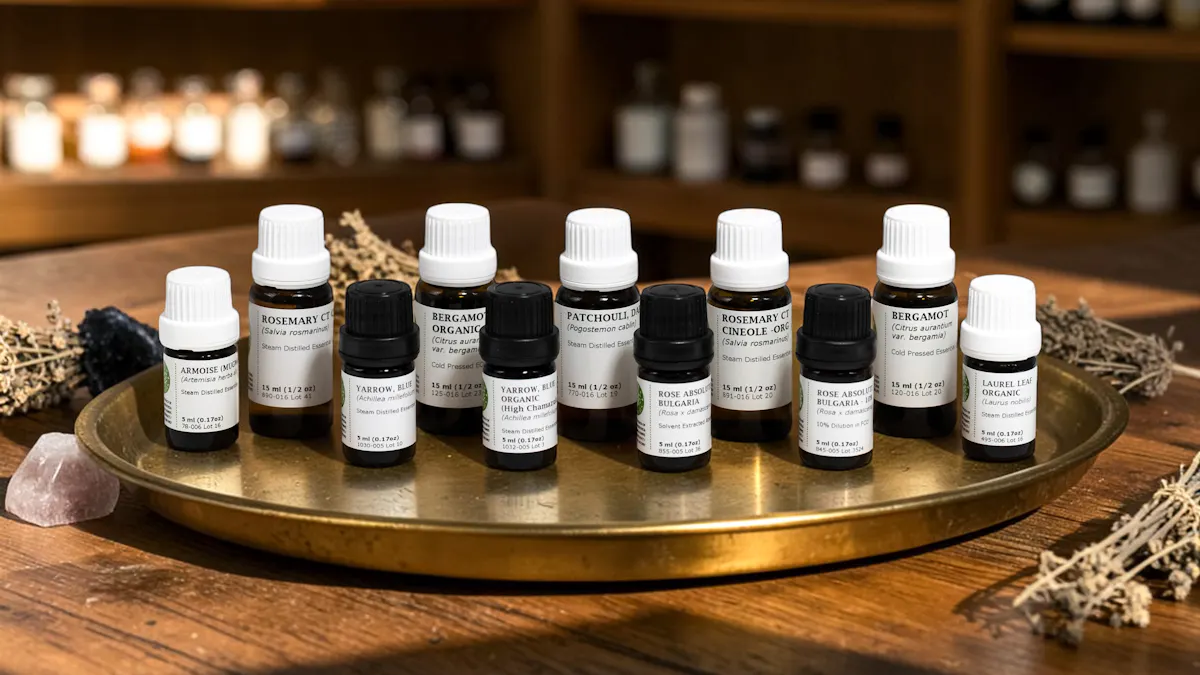
And last, but not least, practice, practice, practice! Begin building your collection of essential oils and spend time getting to know them and their common uses. You can read about the ‘Top 6 Essential Oils for Your Aromatherapy Starter Kit’ here.
Whether you are just beginning or an advanced practitioner or formulator, we’re here to help you along your journey...
No matter how you choose to learn aromatherapy, it’s never too late to get started! Whether you are just beginning or an advanced practitioner or formulator, we’re here to help you along your journey of learning the art and science of aromatherapy. Reach out with your questions and we are happy to help!
Featured Products