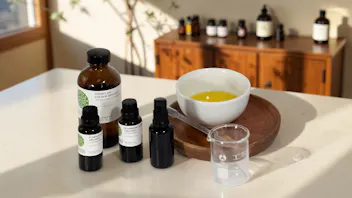
Solubility & Blending Suggestions

  • Dilute and add drop by drop to your blends until the desired effect is achieved.
  • Soluble in both fixed (carrier) oils and 190 proof alcohol. May cause cloudiness when diluted with alcohol; left undisturbed, this will clarify in a day or two with a small amount of sediment at the bottom. The clear portion can be decanted for filtering if desired.  
  • "It blends with almost any other floral … and gives good effects in a concentration of 0.5% up to about 5% of the perfume base."*
  • *Arctander, Steffen. Perfume and Flavor Materials of Natural Origin, 1960, p. 665.

    Suggested Resources

    • Essential Oils – A Handbook for Aromatherapy Practice, Jennifer Peace Rhind, 2012, pp. 141-4, 292.
    • Aromatherapeutic Blending – Essential Oils in Synergy, Jennifer Peace Rhind, 2016, pp. 184, 252-3.
    • The Complete Guide to Aromatherapy, 3rd ed., Vol. I, Salvatore Battaglia, 2018, pp. 600-606.
    • Artisan Perfumery or Being Led by the Nose, Alec Lawless, 2009, p. 76.
    • Perfume and Flavor Materials of Natural Origin, Steffen Arctander, 1960, pp. 664-5.
    • Natural Perfumes - Simple Aromatherapy Recipes, Mindy Green, 1999, p. 46.
    • “Ylang Ylang: Perfume Lexicon & Fragrance Language,” by Victoria Frolova at Bois de Jasmin, January 2012,  https://boisdejasmin.com/2012/01/perfume-lexicon-fragrance-language-ylang-ylang.html
    • “Ylang-a-long: A round-up of Ylang Ylang perfumes,” by Claire Vukcevic in Basenotes, June 2022, https://basenotes.com/features/ylang-a-long-a-round-up-of-ylang-ylang-perfumes/

    Ylang Ylang Complete - Organic EO

    Cananga odorata (Lam.) Hook.f. & Thomson

    (0)
    Sample 3 grams (0.10 oz)
    $3.00

    Contact us for bulk inquiries.

    Botanical NameCananga odorata (Lam.) Hook.f. & Thomson
    Suggested UseAromatherapy, Perfumery, Cosmetics, Soapmaking, Candle Crafting
    INCI NameCananga Odorata (Ylang Ylang) Flower Oil
    CAS Number8006-81-3
    Origin-
    Extraction MethodSteam Distilled
    CultivationCertified Organic
    Plant Partflower.
    Notemiddle, fixatives.
    Aroma Familyfloral.
    Aroma ProfilePowerful, extremely sweet, warm, bold tropical, fruity/floral aroma with a light green, woody undertone; an excellent fixative.
    AppearanceColorless to pale yellow, transparent, slightly oily liquid.
    Shipping Restriction0 – Non-Hazardous

    Safety Considerations

    • Possible skin sensitization (moderate risk); use with caution on hypersensitive or damaged skin, and on children under two years of age.* A maximum dermal use level of 0.8% is recommended.**
    • Dilute before using. A patch test should be performed before use for those with sensitive skin.
    • Store in a cool, dark place away from heat and light.
    • *Tisserand, Robert and Rodney Young. Essential Oil Safety, 2nd ed., 2014, pp. 478, 480.
    • **Ibid.

    Ylang Ylang Complete - Organic EO

    Cananga odorata (Lam.) Hook.f. & Thomson

    (0)

    Our organic Ylang Ylang Complete from Comoros has an aroma that is powerful, extremely sweet, spicy, bold tropical, and fruity/floral with a green, woody undertone; it is an ideal floral component to incorporate into skincare, aromatherapy, and natural perfumery products, and in the case of this

    Size

    Selected size SKU:1040-3 - Ylang Ylang Complete - ORG Sample (1 ml)

    Sample 3 grams (0.10 oz)
    $ 3.00
    $3.00
    Details
    Solubility & Blending Suggestions
    Suggested Resources
    Safety Considerations
    Certificates of Analysis (COA)
    Documentation

    Product Overview

    Our organic Ylang Ylang Complete from Comoros has an aroma that is powerful, extremely sweet, warm, bold tropical, and fruity/floral with a light green, woody undertone; it is an ideal floral component to incorporate into skincare, aromatherapy, and natural perfumery products, and in the case of this powerfully scented oil, a little will go a long way.

    Its heady, floral intensity is why Ylang Ylang is unfairly referred to as “poor man’s Jasmine” – at a comparatively modest price it is one of the finest aromatic materials in the perfume industry. A deeply rich fragrance in itself, Ylang Ylang is a star ingredient in the natural perfumer’s palette, immortalized in many timeless fragrances, including Chanel No. 5 and Guerlain’s Samsara. The lively aroma elevates other florals it is blended with while imparting volume, texture, and a bit of mystery.

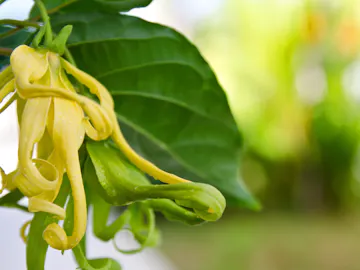
    The name Ylang Ylang appears to come from the Filipino language, from the vernacular ‘Alang-ilang’ by which name this tropical, evergreen tree is known in most of the provinces of the Philippines, its native origin.[2] The trees are now cultivated almost exclusively in a tiny corner of the Indian Ocean – The Comoros Archipelago and Madagascar – where the steam-distilled oil from the large, drooping, highly aromatic flowers is a major export.  

    The ‘Extra’ fraction of Ylang Ylang essential oil, believed to have the finest odor for perfumery, is the first of four fractional distillates that are separated by distillation time and/or density (specific gravity). The subsequent ‘First’ and ‘Second’ medium density fractions contain increasing amounts of sesquiterpene hydrocarbons and are used in cosmetics and body care products. The ‘Third’ and lightest-density fraction is typically used to fragrance soaps, candles and incense. Ylang Ylang ‘Complete’ is technically the result of a continuous distillation of 18 hours or more, rendering a full spectrum, non-fractionated (complete) oil. Ylang Ylang Complete is the preferred oil for aromatherapy applications, however perfumers and high-end soap makers may also appreciate its complexity.

    To richly experience Ylang Ylang with its voluptuous and sultry aroma, Tisserand suggests combining it with Clary Sage for a deeply relaxing bath. [3] Such is the euphoric power of Ylang Ylang’s sensual and comforting aroma, ideal in body and linen sprays, cosmetics, and hair, scalp, and skincare preparations, particularly for oily, congested or mature skin. The sweetly scented bouquet is a calming favorite, perfectly suited for adding into a diffuser or massage and bath oils before bed.

    Aromatic and chemical diversity is the signature of the ‘complete’ distillation of Cananga odorata. It is precisely the marriage of floral, fruity, woody, spicy and balsamic terpenes, esters, ethers, phenols and sesquiterpenes, all in significant proportions, that form the basic ‘accord’ of Ylang Ylang. In aromatherapy, there is no better expression of this exotic flower than in the wide spectrum of skincare and aromatic possibilities offered by Ylang Ylang Complete.

    DILUTION NOTE: When this material is diluted in perfumer’s alcohol, there may be cloudiness (please see Solubility & Blending Suggestions section). Guenther explains: “The solubility of Ylang Ylang oil, in general, is poor. This statement applies to all qualities (fractions). Usually from 0.5 to 3 [percent by] volume of 95 percent alcohol [is] required to give a clear solution, which often becomes cloudy on addition of more alcohol.”[4] If cloudiness occurs, this precipitates upon standing and can be filtered out, leaving a perfectly clear (non-cloudy) dilution.

    Need help deciding which Ylang Ylang is right for you? Please see this informative article in our Education section:

    Ylang Ylang - An Offering for Every Application

    2 Guenther, Ernest. The Essential Oils, Vol. V, 1952/1985, p. 278.

    3 Tisserand, Robert. Aromatherapy, 1988, pp. 196-9, 205.

    4 Guenther, Ernest. The Essential Oils, Vol. V, 1952/1985, p. 300.
    Product Overview

    Our organic Ylang Ylang Complete from Comoros has an aroma that is powerful, extremely sweet, warm, bold tropical, and fruity/floral with a light green, woody undertone; it is an ideal floral component to incorporate into skincare, aromatherapy, and natural perfumery products, and in the case of this powerfully scented oil, a little will go a long way.

    Its heady, floral intensity is why Ylang Ylang is unfairly referred to as “poor man’s Jasmine” – at a comparatively modest price it is one of the finest aromatic materials in the perfume industry. A deeply rich fragrance in itself, Ylang Ylang is a star ingredient in the natural perfumer’s palette, immortalized in many timeless fragrances, including Chanel No. 5 and Guerlain’s Samsara. The lively aroma elevates other florals it is blended with while imparting volume, texture, and a bit of mystery.

    The name Ylang Ylang appears to come from the Filipino language, from the vernacular ‘Alang-ilang’ by which name this tropical, evergreen tree is known in most of the provinces of the Philippines, its native origin.[2] The trees are now cultivated almost exclusively in a tiny corner of the Indian Ocean – The Comoros Archipelago and Madagascar – where the steam-distilled oil from the large, drooping, highly aromatic flowers is a major export.  

    The ‘Extra’ fraction of Ylang Ylang essential oil, believed to have the finest odor for perfumery, is the first of four fractional distillates that are separated by distillation time and/or density (specific gravity). The subsequent ‘First’ and ‘Second’ medium density fractions contain increasing amounts of sesquiterpene hydrocarbons and are used in cosmetics and body care products. The ‘Third’ and lightest-density fraction is typically used to fragrance soaps, candles and incense. Ylang Ylang ‘Complete’ is technically the result of a continuous distillation of 18 hours or more, rendering a full spectrum, non-fractionated (complete) oil. Ylang Ylang Complete is the preferred oil for aromatherapy applications, however perfumers and high-end soap makers may also appreciate its complexity.

    To richly experience Ylang Ylang with its voluptuous and sultry aroma, Tisserand suggests combining it with Clary Sage for a deeply relaxing bath. [3] Such is the euphoric power of Ylang Ylang’s sensual and comforting aroma, ideal in body and linen sprays, cosmetics, and hair, scalp, and skincare preparations, particularly for oily, congested or mature skin. The sweetly scented bouquet is a calming favorite, perfectly suited for adding into a diffuser or massage and bath oils before bed.

    Aromatic and chemical diversity is the signature of the ‘complete’ distillation of Cananga odorata. It is precisely the marriage of floral, fruity, woody, spicy and balsamic terpenes, esters, ethers, phenols and sesquiterpenes, all in significant proportions, that form the basic ‘accord’ of Ylang Ylang. In aromatherapy, there is no better expression of this exotic flower than in the wide spectrum of skincare and aromatic possibilities offered by Ylang Ylang Complete.

    DILUTION NOTE: When this material is diluted in perfumer’s alcohol, there may be cloudiness (please see Solubility & Blending Suggestions section). Guenther explains: “The solubility of Ylang Ylang oil, in general, is poor. This statement applies to all qualities (fractions). Usually from 0.5 to 3 [percent by] volume of 95 percent alcohol [is] required to give a clear solution, which often becomes cloudy on addition of more alcohol.”[4] If cloudiness occurs, this precipitates upon standing and can be filtered out, leaving a perfectly clear (non-cloudy) dilution.

    Need help deciding which Ylang Ylang is right for you? Please see this informative article in our Education section:

    Ylang Ylang - An Offering for Every Application

    2 Guenther, Ernest. The Essential Oils, Vol. V, 1952/1985, p. 278.

    3 Tisserand, Robert. Aromatherapy, 1988, pp. 196-9, 205.

    4 Guenther, Ernest. The Essential Oils, Vol. V, 1952/1985, p. 300.

    Blends Well With

    logo

    2026-03-27

    Why You Need Mushroom in Your Perfume

    There’s a dirty little secret known to experienced perfumers: the most intriguing fragrances always contain something a little ‘off.’ Historically, formulators used animal-derived aromas like ambergris, civet, and castoreum, now mostly replaced by synthetic versions. But perfumers still rely on the funky facets in botanicals...

    logo

    2026-03-20

    DIY Spring Cleaning with Essential Oils

    Riding the wave of spring renewal, this is the time many of us feel inspired to refresh and reset our living spaces. Essential oils offer an effective and enjoyable way to approach our spring cleaning, providing a natural alternative to products made with harsh chemicals or synthetic fragrances.

    logo

    2026-03-13

    Essential Oils for Good Luck and Prosperity

    The month of March has long been associated with good fortune across many cultures. Along with the arrival of spring comes a natural flow toward new beginnings, awakenings, rejuvenation, and hope.