4 min read
2024-07-12
Hazmat Shipping 101
Written By: Eden Botanicals
Have you ever wondered why you might see the term “Restricted” next to some of the oils in your cart?
Although it may look scary, it has to do with the Hazmat category under which they are classified to keep your oils safe during shipment. Those oils with a low flash point (the temperature at which a substance becomes combustible when exposed to flame), such as citrus oils, are categorized as Class 3 – Flammable. Others, like the Cedarwoods, are categorized as Class 9 – Miscellaneous, as they may have less flammability though can be considered an environmental hazard if spilled. When an oil falls into one of these categories, it means that we must follow strict regulations to ensure their safe transport. In addition, our shipping manager must keep up to date with bi-yearly training through The International Air Transport Association (IATA). She must also stay current on “Dangerous Goods Regulations”, which are updated annually.
Although there are a few potential categories that your oils may fall under, for the purposes of this article we are focusing on Class 3 and Class 9. If you’re ever curious about the Hazmat categories of any of your oils, look no further than the Safety Data Sheet (SDS), under Section 2: Hazard(s) Identification. The SDS of each oil can be found on its product page, under the Documentation section. Again, don’t let the hazardous statements alarm you. The information for the oil is based on using it full strength and in large quantities, which is why diluting the oil is necessary. They’re powerful stuff!
Let’s start with Class 3 – Flammable.
Because of their low flash point, these oils may need special handling or added fees when shipping by air, depending on the bottle size and total quantity of the order. Air shipments occur when an order is expedited, like next day air, or if the order is shipping outside the continental US. The total quantity of the Class 3 oils in the shipment must not surpass 32-33 oz, depending on the product’s actual ounces per kilo. Additionally, the product cannot be bottled in sizes larger than 1 oz. For instance, if an order contains 4 oz of Lemon oil, it will need to be shipped in four 1 oz bottles. For ground shipments there are no size restrictions or added fees.
Shipping an oil with Class 9 – Miscellaneous...
means that it may have some flammability concerns, but moreover, extra care needs to be taken to ensure large quantities of the oil do not spill or emit vapors into the environment during transport. For any air shipment exceeding 5 kg of oil in this category, the order will be subject to additional dangerous goods fees with special handling. Anything under 5 kg is considered non-hazardous, no matter if shipping air or ground.
For both Class 3 and Class 9,
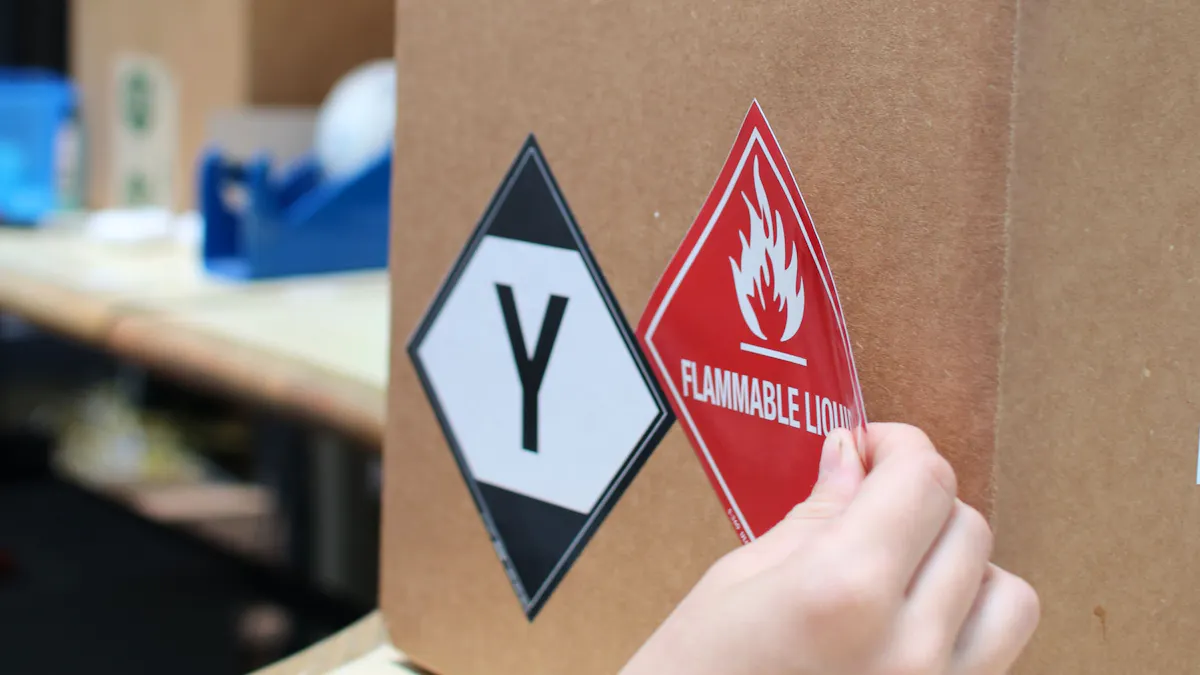
if the order is shipping ground and the quantities exceed the allowable limits described above, hazardous stickers will be added to your package, but there will not be any additional fees. And one last twist, the United States Postal Service (USPS) does not allow shipping any oils considered hazardous in quantities over 1 ml (the size of our samples) per order shipped via air. Thankfully, the post office does offer USPS Ground Advantage, which allows up to 1-liter of hazardous items shipped via ground. This is a cost-effective way to get larger orders through USPS for those who are able to receive ground shipments.
At Eden, we take shipping regulations seriously and are dedicated to getting your oils to you safely and securely. If you have further questions regarding shipping any oils that are considered dangerous goods, please contact shipping@edenbotanicals.com. We’re here to help!